
 1 month ago
26
1 month ago
26
Key Takeaways
- AI advancements could lead to significant job market disruptions, potentially increasing unemployment.
- The fear of AI displacing jobs has already caused notable market fluctuations.
- AI may cause a painful transition period before stabilizing the job market.
- Technological improvements in AI will change workforce roles, especially in programming.
- Economic growth is historically limited, challenging the notion of limitless expansion.
- AI’s impact on small business legal services may be limited, increasing inequality.
- Traditional roles in industries like accounting and journalism are likely to be disrupted by AI.
- Human interaction and storytelling remain irreplaceable in journalism despite AI advancements.
- Massive AI investments could disrupt the software industry significantly.
- A single interface for interacting with various specialized bots is likely to emerge.
- AI’s impact on the economy could lead to a hollowing out of the software industry.
- The future of AI interactions will likely consolidate into a single interface.
- The economic pie’s growth is not infinite, as historical limits constrain it.
- AI’s potential to automate tasks in small business legal services may increase inequality.
- Human elements in journalism, such as interviews, cannot be fully replaced by AI.
Guest intro
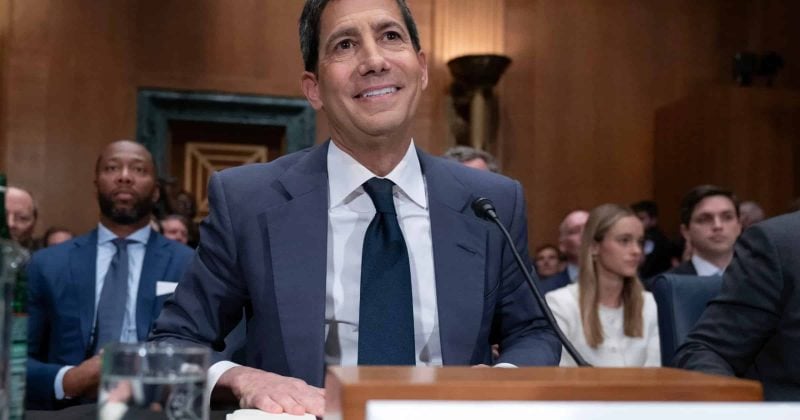
Andrew Ross Sorkin is co-anchor of CNBC’s Squawk Box and a financial columnist for The New York Times. He is the author of the bestselling book 1929, which chronicles the worst market crash in history. He also founded DealBook, the Times’ daily financial news service, in 2001.
AI’s impact on employment and market dynamics
- AI advancements could significantly increase unemployment if they disrupt current job markets. “AI could lead to a significant increase in unemployment if it successfully disrupts current job markets.” – Andrew Ross Sorkin
- The fear of AI displacing jobs has already caused significant market fluctuations. “Last month software stocks lost a trillion dollars in market cap because there was this fear that AI could just displace them.” – Andrew Ross Sorkin
- AI may not lead to mass unemployment in the long term but could cause a painful transition period. “I think it’s possible that there could be a painful transition period and historically… when we’ve gone through these technological revolutions there have been painful transition periods.” – Andrew Ross Sorkin
- The technology will inevitably improve, leading to significant changes in workforce roles. “If you believe in the technology improving which invariably it has to… if it does improve the way I think… I just don’t see how we’re gonna be sitting around doing our own programming.” – Andrew Ross Sorkin
- AI and automation are likely to disrupt traditional roles in various industries, including accounting and journalism. “There are places where I could definitely see some real disruption accounting to me… it just does seem like there are less roles than there are for that so much of that throughout our entire economy by the way take journalism for example…” – Andrew Ross Sorkin
- Human interaction and storytelling remain irreplaceable in journalism despite AI advancements. “Nothing will beat the reporter going into the locker room correct and speaking to the closer absolutely like what were you thinking when you threw that fastball ball down the middle.” – Andrew Ross Sorkin
- Massive AI investments could disrupt the software industry significantly. “We know that will disrupt the economy… if that 700,000,000,000 in capex that the tech giants are spending this year on AI pays off, you’re going to have this entire hollowing out of the software industry of many maybe other industries.” – Andrew Ross Sorkin
- The future of AI interactions will likely consolidate into a single interface. “I think I’ll go with there’s gonna be one interface I don’t know if it’s one bot but one interface that you will interact with.” – Andrew Ross Sorkin
Economic growth and inequality in the AI era
- The growth of companies is constrained by historical limits, challenging the notion of limitless expansion. “I know there are people who believe that it could but invariably it at least historically hasn’t there are sort of upper limits to even what growth could ultimately even look like.” – Andrew Ross Sorkin
- AI’s impact on small business legal services may be limited, increasing inequality. “I don’t think it’s exponential but I think it can grow… I do believe this is talk about inequality… the wealth and the great riches are going to go both to the model makers some of the big tech companies and probably the folks who already have had success.” – Andrew Ross Sorkin
- Economic growth is historically limited, challenging the notion of limitless expansion. “I know there are people who believe that it could but invariably it at least historically hasn’t there are sort of upper limits to even what growth could ultimately even look like.” – Andrew Ross Sorkin
- AI’s potential to automate tasks in small business legal services may increase inequality. “I don’t think it’s exponential but I think it can grow… I do believe this is talk about inequality… the wealth and the great riches are going to go both to the model makers some of the big tech companies and probably the folks who already have had success.” – Andrew Ross Sorkin
- The economic pie’s growth is not infinite, as historical limits constrain it. “I know there are people who believe that it could but invariably it at least historically hasn’t there are sort of upper limits to even what growth could ultimately even look like.” – Andrew Ross Sorkin
- AI’s impact on small business legal services may be limited, increasing inequality. “I don’t think it’s exponential but I think it can grow… I do believe this is talk about inequality… the wealth and the great riches are going to go both to the model makers some of the big tech companies and probably the folks who already have had success.” – Andrew Ross Sorkin
Disclosure: This article was edited by Editorial Team. For more information on how we create and review content, see our Editorial Policy.














 English (US) ·