
 4 weeks ago
27
4 weeks ago
27
For years, financial inclusion followed a familiar script: get more people into banks.
Open an account. Build a credit history. Join the formal financial system.
But at Philippine Blockchain Week, a panel I moderated on the future of financial inclusion suggested that the next billion people entering the global economy may take a very different path. They may never step into a bank branch, open a traditional savings account, or even consider themselves crypto users. Instead, they’ll simply use digital wallets, stablecoins, and mobile apps that happen to run on blockchain infrastructure beneath the surface.
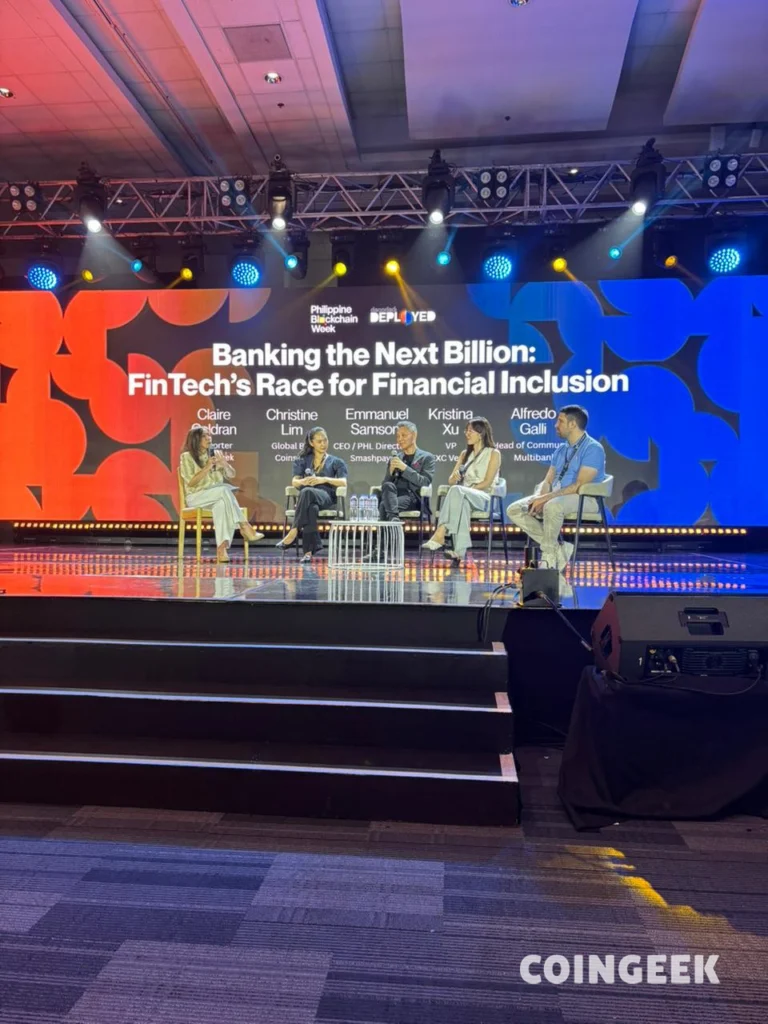
The discussion brought together Christine Lim, Global Business Development Director at Coins.ph; Emmanuel Samson, CEO of SmashPay Philippines; Kristina Xu, Vice President of MEXC Ventures; and Alfredo Galli, Head of Community at MultiBank Group’s exchange arm, MB.io.
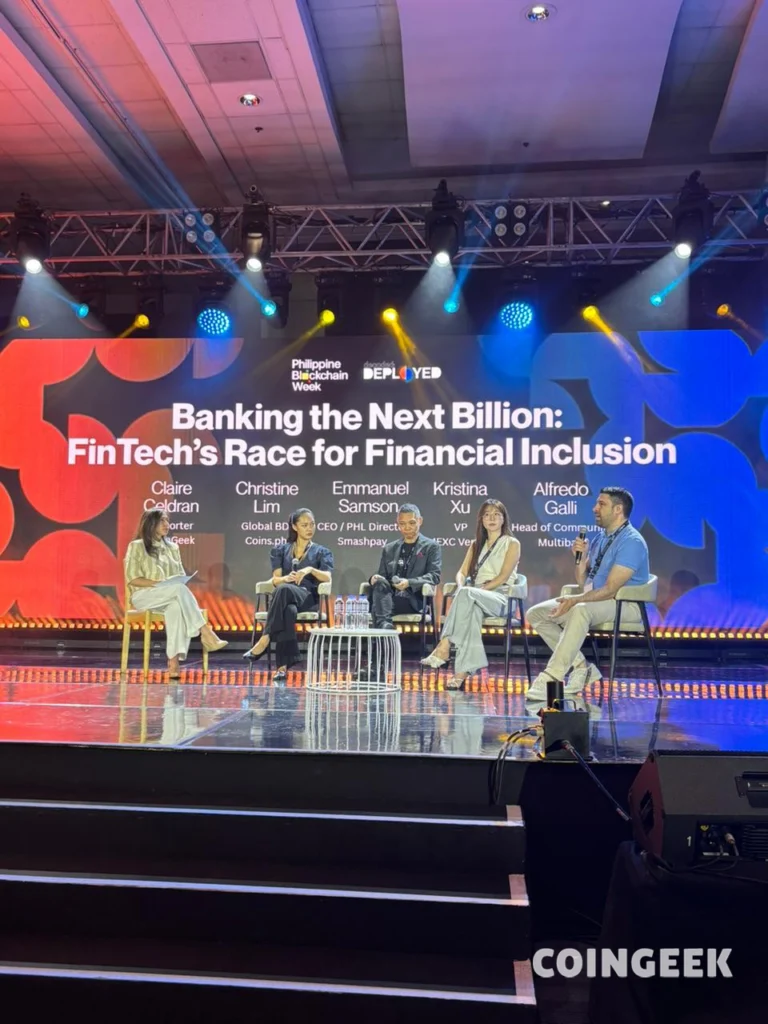
While the panelists represented different corners of the industry, they largely agreed on one thing: bringing the next billion people into the financial system is achievable. The real question is whether the future of financial inclusion will look anything like the past. The Philippines itself gives a glimpse of that future.
“The Philippines was very well known as a very cash-heavy economy,” Lim said. “Now, if you actually just go around, everyone is using their phone to pay.”
That shift happened faster than many expected. Digital wallets and QR payments have become part of daily life, even among people who historically had limited access to traditional banking services. On platforms like Coins.ph, users can switch between pesos and stablecoins for everyday purchases via QRPH, collapsing what were once multiple financial steps into a single experience.
For many younger consumers, the first financial product they own is no longer a bank account. It’s a digital wallet.
Galli believes that change represents progress rather than disruption.
“I believe it’s an exceptional shift, very, very positive,” he said. “The way we see banking and institutions will gradually become crypto. They will have their own wallets.”

That doesn’t necessarily mean banks disappear. The boundaries between traditional finance and blockchain are becoming increasingly blurred.
One of the more striking themes from the discussion was convergence rather than competition.
“Nothing can be done by itself,” Lim said. “Fintech brings more about the speed and experience that people are actually having. And then the traditional side brings more regulation and sets the foundation.”
The old narrative of crypto replacing banks is giving way to a different reality: banks, fintech companies, and blockchain firms building on one another’s strengths.
Xu sees convergence occurring across investment products as well. Exchanges that once focused exclusively on digital assets are increasingly offering exposure to tokenized stocks, commodities, foreign exchange products, and other real-world assets on a single platform.
For users, convenience matters more than whether a product is considered traditional finance or digital finance.
But if one blockchain application is quietly driving this transformation, it is stablecoins.
Asked where she sees the strongest real-world use cases today, Xu didn’t hesitate: “I think the answer is stablecoin.”
It was a recurring theme throughout the discussion.
While much of crypto’s public image remains tied to speculation, stablecoins have emerged as one of the industry’s most practical products. They offer faster remittances, cheaper cross-border payments, and access to dollar-denominated assets for populations that may never have enjoyed those opportunities through conventional banking channels.
That is particularly relevant in countries like the Philippines, where overseas workers send billions of dollars home every year. Yet despite technological progress, the panelists repeatedly returned to a more fundamental challenge—trust.
“The technology part is the easy part,” Samson said. “I think it’s really trust.”
For all the innovation underway, the barriers to mass adoption are increasingly human rather than technical. Education, regulation, and public understanding remain far bigger roadblocks than blockchain infrastructure itself. People still trust what they know. Traditional financial institutions have spent generations building credibility. New technologies must earn that confidence rather than assume it.
Samson argued that simplicity matters just as much as innovation. “You can have the best technology, but if no one’s using it, it’s useless,” he said.
Xu, meanwhile, warned against relying solely on excitement to drive adoption. “Hype is important, but not all about hype,” she said. “Put it into real usage. Put more effort into real usage, because in the finality, the worth itself proves a value.”
Their message captures where the blockchain industry finds itself today: success will increasingly be determined not by attention or speculation, but by whether ordinary people find real value in the products being built.
Ironically, the next billion people entering the financial system may not think of themselves as crypto users at all.
They will simply be people using faster payments, cheaper remittances, digital dollars, and mobile wallets that happen to run on blockchain rails beneath the surface.
Watch: Inside Philippine Blockchain Week 2026 | Driving the Future of Blockchain, AI & Web3












 English (US) ·