
 1 month ago
25
1 month ago
25
A dispute over stablecoin rewards — not sweeping disagreements about crypto itself — is what’s holding up one of the most significant digital asset bills in US history.
Banks And Crypto Firms Clash Over Stablecoin Yields
At the center of the standoff is a narrow but contentious question: should third-party firms like Coinbase be allowed to pass stablecoin yields on to their customers? Banks say no, warning it could drain deposits from traditional financial institutions.
Crypto companies say yes, arguing it’s essential to staying competitive. That single point of friction has stalled the CLARITY Act in the Senate for months, even as the Trump administration pushes hard for a vote.
Treasury Secretary Scott Bessent went public Tuesday with a blunt message — Congress needs to move now, before Senate floor time runs out.
According to reports, Bessent described the situation as urgent, saying “time is scarce, and now is the time to act.” He framed the legislation not just as a financial policy matter but as a national security concern, arguing that economic security and national security are one and the same.
The U.S. Treasury Secretary is weighing in on the push to pass crypto market structure legislation in a new @WSJ op-ed.@SecScottBessent framed it as a national priority, saying “economic security is national security,” and argued the Clarity Act is the cornerstone to bringing…
— Eleanor Terrett (@EleanorTerrett) April 9, 2026
Adoption Numbers Add Weight To The Push
The case for urgency isn’t just political. Data shows that roughly one in six Americans already holds some form of digital asset. Major banks and financial institutions have either launched crypto-related products or applied to do so.
Blockchain technology, according to Bessent, has worked its way into payments, settlements, and the trading of real-world assets at a scale that regulators can no longer ignore.
The global crypto market swung between $2 trillion and $3 trillion in value over the past year alone — a range that reflects both the size and the volatility of the industry. That backdrop gives the push for a regulatory framework added weight, especially as traditional finance continues to wade deeper into the space.
Senator Cynthia Lummis joined Bessent’s call, saying the conditions for passing the CLARITY Act are as good as they’ve ever been.
“We have the administration, the momentum, and we’ve made bipartisan progress,” she said. A Senate markup of the bill is expected sometime in April, though similar deadlines have slipped before.
White House Study Adds Fuel To Banking Debate
A White House analysis recently found that the risk of deposit flight from allowing stablecoin rewards is, by its own description, “quantitatively small.”
Under the GENIUS Act framework, stablecoin issuers are barred from paying yields directly. The CLARITY Act, however, would open the door for third-party distributors to do it instead.
Some banking members pushed back on the White House findings, arguing the analysis overlooked key funding risks beyond deposit levels.
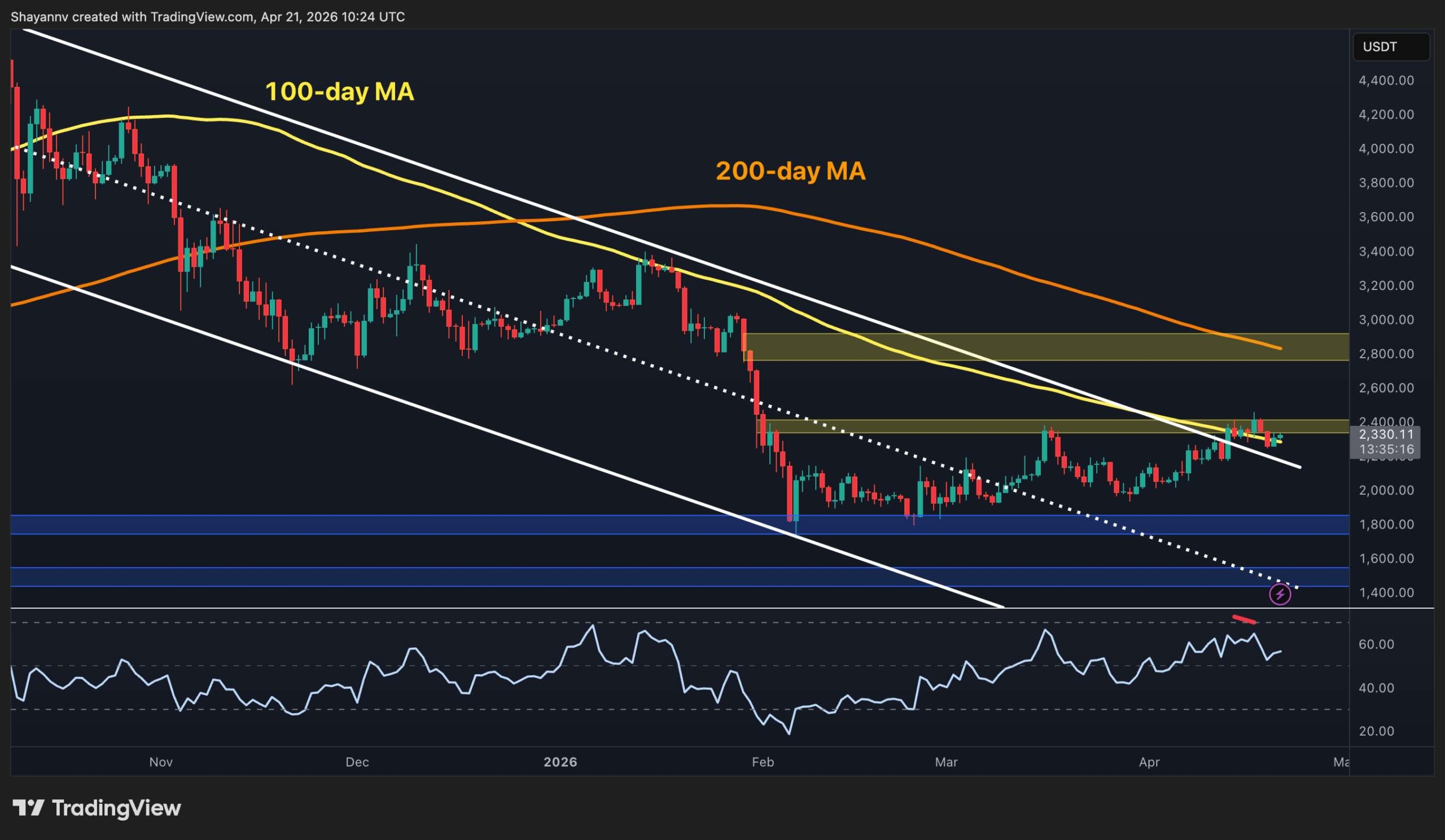
Featured image from Getty Images, chart from TradingView














 English (US) ·