
 1 month ago
33
1 month ago
33
Sending money across borders in 2026 still feels like faxing a document. Multiple intermediaries, days of waiting, compliance checks scattered across jurisdictions, and fees that stack up at every handoff. The Bank for International Settlements just demonstrated that it doesn’t have to be this way.
On May 27, the BIS announced the successful prototype development of Project Agorá, a system that tokenizes central bank reserves and commercial bank deposits on a unified programmable ledger. The result: atomic, multi-currency settlement that bundles compliance, foreign exchange, and final settlement into a single process.
What Project Agorá actually built
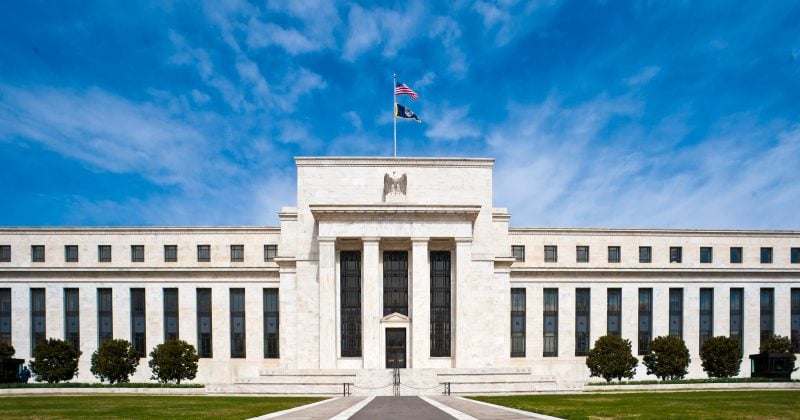
The prototype brings together seven central banks, including the Federal Reserve Bank of New York, the Bank of England, and the Bank of Japan. More than 40 private financial institutions participated alongside them. On the day of the announcement, the Bank of Canada officially joined the initiative, adding another G7 central bank to the roster.
Project Agorá collapses the correspondent banking chain by integrating messaging, reconciliation, and settlement into one process on a shared ledger. The prototype demonstrated continuous operations and efficient cross-border flows using tokenized representations of central bank money and commercial bank deposits, preserving the existing two-tier monetary system where central banks issue base money and commercial banks create deposits on top.
From theory to prototype to real-value testing
Project Agorá launched in 2024, making this a roughly two-year journey from concept to working prototype. The initiative builds on earlier BIS work, including tokenized platform discussions outlined in its 2025 Annual Report and various innovation hub trials.
The next phase will focus on real-value testing of tokenized central bank money and deposits on blockchain infrastructure, moving from technical proof-of-concept to testing with actual money on the line.
What this means for investors
No public crypto assets are involved. But the broader implication is that tokenization as a concept just received one of the strongest endorsements possible from the institution that coordinates the world’s central banks, shifting the context for every adjacent technology including public blockchain infrastructure that handles tokenized assets.
For businesses engaged in international trade, bundling compliance, FX, and settlement into a single atomic process means fewer intermediaries extracting fees, faster finality, and reduced counterparty risk.
The risk to watch is timeline. Real-value testing could take years before any production deployment. But with seven central banks and over 40 financial institutions already committed, the political capital invested in Agorá makes it harder to quietly shelve than a typical innovation experiment.
Disclosure: This article was edited by Editorial Team. For more information on how we create and review content, see our Editorial Policy.













 English (US) ·