
 2 hours ago
1
2 hours ago
1

content, reviewed by leading industry experts and seasoned editors. Ad Disclosure
The Gwangju District Prosecutors’ Office sold off all of 320 (BTC) recovered from hackers and returned them to the national treasury.
The Bitcoin Heist
According to a piece published by Chosun Ilbo, The Gwangju District Prosecutors’ Office announced on March 10 that it had “sold all 320.8 Bitcoins at market price, repatriating 31.5 billion won to the national treasury.” The Bitcoins were originally seized from Ms. A, the daughter of operators of a ₩390 billion illegal gambling ring, despite being lost later during the process of transferring the seized Bitcoin to the national treasury. They were then recovered on February 18, when “the Bitcoins returned to an existing wallet, where the prosecutors controlled the keys, without their knowledge”, as reported by Korean outlet Digital Asset.
From Phishing Fiasco To Perfect Recovery
The re-recovered Bitcoin were liquidated on a domestic exchange and converted into roughly ₩31 billion that have now been transferred to the National Treasury. Prosecutors stress they executed the sale gradually over 11 days, from February 24 to March 6, to avoid disturbing the market price, while an internal probe into how the assets were lost in the first place is still ongoing
A Repeated Incident
This is not the first time South Korea has a major custody failure. On February, authorities accidentally leaked private keys in public documents, which led to the theft of 4 million tokens, roughly valued at $4.8 million. These repeated incident raises the evident hard question about whether governments, or at least SK’ government, are prepared to safeguard digital assets they confiscate.
It’s worth noting that South Korea is rapidly building a legal and operational playbook for seized crypto, with the Supreme Court recently ruling that bitcoin held on local exchanges can be legally treated as an “object of seizure” under the Criminal Procedure Act.
For traders, the Gwangju sale is another reminder that law‑enforcement liquidations are now a structural source of BTC supply, and for policymakers, it underscores that seizing coins is only half the battle: securing them and exiting positions without roiling markets is quickly becoming a new kind of sovereign market risk.
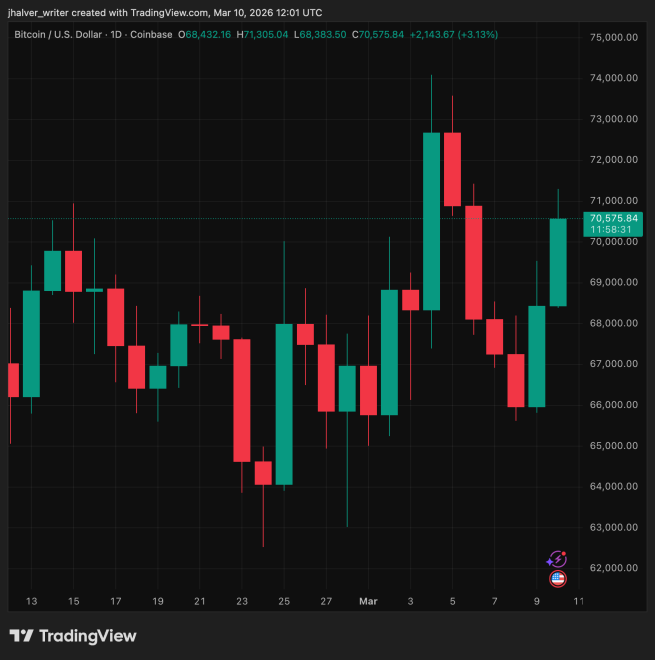
Cover image from ChatGPT, BTCUSD chart from Tradingview
Editorial Process for bitcoinist is centered on delivering thoroughly researched, accurate, and unbiased content. We uphold strict sourcing standards, and each page undergoes diligent review by our team of top technology experts and seasoned editors. This process ensures the integrity, relevance, and value of our content for our readers.












 English (US) ·