
 1 month ago
28
1 month ago
28
The European Central Bank (ECB) has formally endorsed a proposal to transfer direct supervisory authority over systemically important cryptocurrency firms to the European Securities and Markets Authority (ESMA), positioning the Paris-based regulator as the bloc’s primary crypto overseer in a move that would materially reshape the regulatory architecture established under the Markets in Crypto-Assets (MiCA) framework.
The ECB’s backing, which emerged in the context of the European Commission’s February 2026 Capital Markets Union legislative package – catalogued under COM/2025/941, 942, and 943 – escalates a years-long drive toward consolidated financial supervision across the European Union’s 27 member states.
The proposal faces structured resistance from Ireland, Luxembourg, and Malta – each of which has cultivated a domestic crypto licensing regime under MiCA and stands to lose regulatory jurisdiction and associated economic activity if ESMA assumes centralized supervisory control.
The outcome of this institutional contest will determine whether the EU’s crypto regulatory architecture consolidates into a single supervisory node or retains the fragmented national-competent-authority model that has defined enforcement since MiCA’s late-2023 implementation.
🚨ECB BACKS PLAN TO CENTRALIZE EU CRYPTO SUPERVISION UNDER ESMA
The European Central Bank supports shifting oversight to the Paris-based ESMA watchdog, reinforcing centralized supervision across the EU, per Reuters. pic.twitter.com/V8pRlW8nTK
— Coin Bureau (@coinbureau) April 12, 2026
We suspect the ECB’s endorsement is not primarily about investor protection or market stability in the abstract – it is a deliberate institutional maneuver to establish a supervisory counterpart with whom the ECB can negotiate directly on systemic risk, settlement asset standards, and monetary policy boundary conditions. The ECB’s concurrent request for a non-voting seat on ESMA’s Executive Board for discussions involving crypto-asset service providers, central counterparties (CCPs), and central securities depositories (CSDs) makes the strategic logic explicit: Frankfurt wants a chair at the table when ESMA makes decisions that intersect with monetary transmission and the integrity of euro-denominated settlement infrastructure.
DISCOVER: Best crypto to buy right now – CoinSpeaker’s updated guide
ESMA Supervision Under MiCA: How ECB Centralized Crypto Framework Would Function
The mechanism functions as follows: under the current MiCA structure, ESMA drafts binding technical standards and coordinates national competent authorities but holds no direct supervisory mandate over individual crypto firms.
The proposed expansion – embedded within the Capital Markets Union legislative package – would grant ESMA direct supervisory jurisdiction over entities meeting a threshold of systemic importance, a category currently understood to encompass major trading venues, CCPs, CSDs, and large-scale crypto-asset service providers, though the precise quantitative threshold for systemic designation remains under active negotiation among member states.
The ECB’s specific institutional demands add further architectural detail. Beyond its request for an Executive Board seat, the ECB has called for risk-sensitive own-funds requirements calibrated to the volatility and counterparty exposure profiles of crypto firms – a structural analog to the capital adequacy regime applied to traditional banks under the Capital Requirements Regulation.
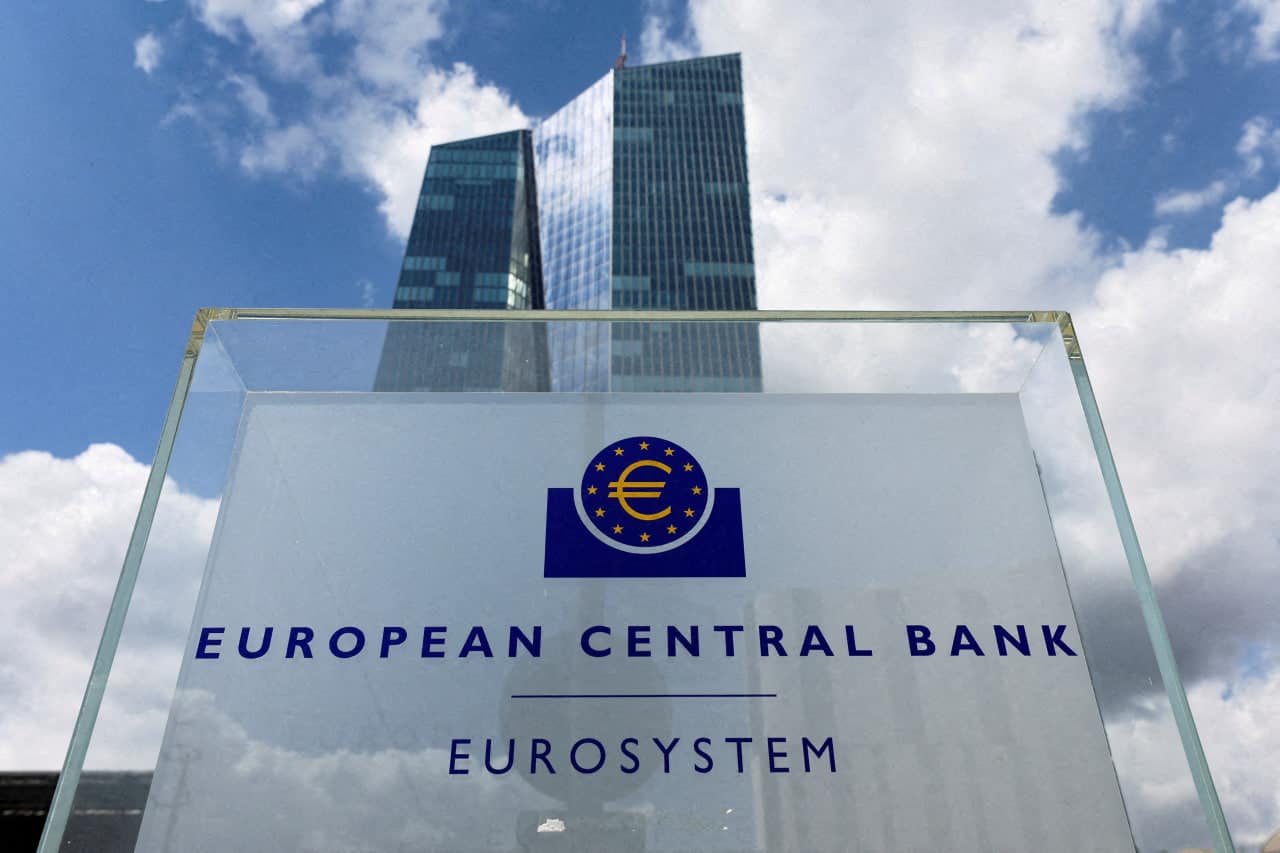
Photo: ECB
The ECB has also proposed a hard cap on e-money tokens used as settlement assets, with an exemption available only where central bank money is operationally unavailable – a provision that would effectively subordinate private stablecoin settlement to sovereign monetary infrastructure in all standard market conditions.
ESMA’s resource constraints present the immediate implementation obstacle. The authority currently lacks the staffing and funding to assume direct supervisory responsibility for a sector characterized by rapid product iteration and cross-border operational complexity.
The ECB has explicitly flagged that inadequate resourcing could undermine the initiative’s efficacy, and a phased transition timeline – the precise duration of which has not been publicly specified – is expected to extend the legislative negotiation by several months beyond the Commission’s initial calendar.
EXPLORE: Best meme coins to watch – CoinSpeaker’s updated rankings
Disclaimer: Coinspeaker is committed to providing unbiased and transparent reporting. This article aims to deliver accurate and timely information but should not be taken as financial or investment advice. Since market conditions can change rapidly, we encourage you to verify information on your own and consult with a professional before making any decisions based on this content.
Web3 News, Cryptocurrency News

Daniel Frances is a technical writer and Web3 educator specializing in macroeconomics and DeFi mechanics. A crypto native since 2017, Daniel leverages his background in on-chain analytics to author evidence-based reports and deep-dive guides. He holds certifications from The Blockchain Council, and is dedicated to providing "information gain" that cuts through market hype to find real-world blockchain utility.















 English (US) ·