
 4 days ago
7
4 days ago
7
Explosions ripped through Bandar Abbas, Iran’s most strategically vital port city, with state-affiliated Nour News confirming the blasts along the Gulf Coast. The incidents, tied to ongoing US military strikes targeting Iranian naval and missile installations, mark another chapter in a rapidly escalating confrontation between Washington and Tehran that has rattled energy markets but left crypto surprisingly unfazed.
Bitcoin was trading near $63,800 during the latest round of strikes, registering an intraday move of roughly 0.3%.
What’s happening in Bandar Abbas
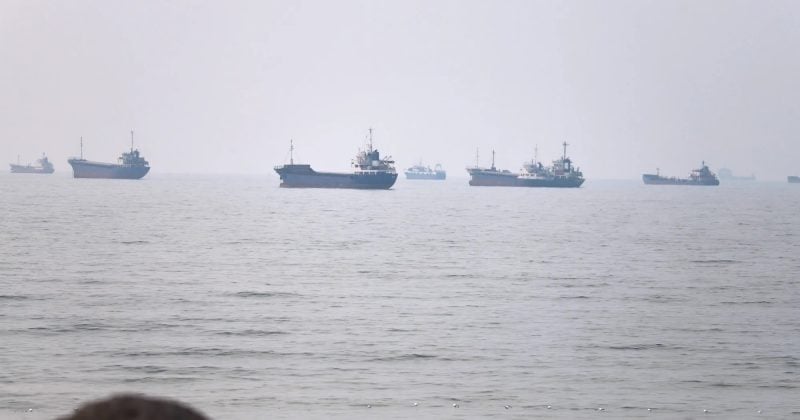
The explosions, reported between July 12 and 14, targeted areas east of Bandar Abbas, a city that serves as Iran’s primary naval base and handles approximately 80 million tons of goods annually. US Central Command confirmed it was striking coastal defense and maritime facilities, a pointed response to what Washington described as Tehran’s aggression toward commercial shipping in the region.
Bandar Abbas sits right on the Strait of Hormuz, the narrow waterway through which roughly 20% of the world’s seaborne oil passes.
Iran responded by announcing the closure of the Strait of Hormuz “until further notice,” a move that sent oil futures into a frenzy and immediately raised the specter of a global energy supply shock.
This wasn’t the first time Bandar Abbas made headlines this year. Prior explosions near the city in January and May 2026 had already rattled both energy and crypto markets, though each successive event seems to produce a slightly smaller reaction in digital asset prices.
Crypto’s strange calm
Earlier incidents in July had actually followed that script, with Bitcoin dipping below $73,000 during a broader risk-off wave across markets. But the latest round of strikes saw Bitcoin at $63,800 and Ether around $1,800 with similarly limited volatility.
The regulatory war running parallel
While missiles fly in the Gulf, the US Treasury has been waging its own campaign against Iranian-linked crypto activity. Authorities seized approximately $450 million in digital assets connected to Iranian entities. The Treasury also slapped sanctions on Nobitex, an exchange tied to Iran’s Islamic Revolutionary Guard Corps, making it one of the most prominent exchanges to be directly sanctioned for links to a designated military organization.
What this means for investors
The $450 million asset seizure sets a precedent that investors should watch carefully. If US authorities can identify and freeze that volume of Iranian-linked crypto, the surveillance and enforcement infrastructure is clearly more advanced than many market participants assumed.
The pattern from 2026 so far is instructive. The initial shock from the January Bandar Abbas incidents produced meaningful crypto drawdowns. By May, the reaction was smaller. By July, it was nearly imperceptible.
Disclosure: This article was edited by Editorial Team. For more information on how we create and review content, see our Editorial Policy.














 English (US) ·