
 1 day ago
3
1 day ago
3
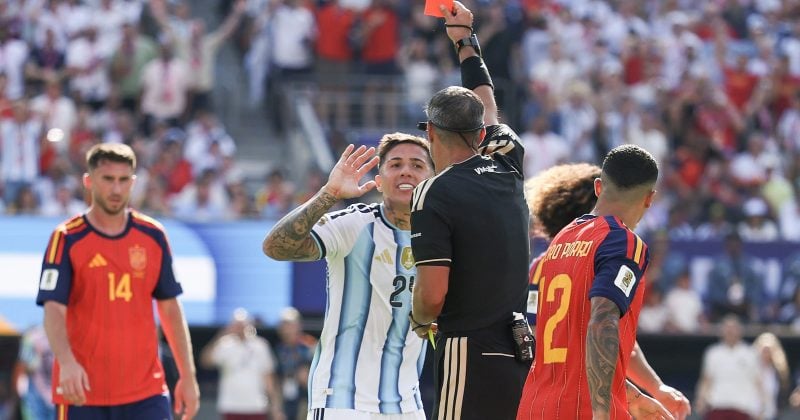
A 2026 FIFA World Cup match in Kansas City was the backdrop for yet another collision between consumer drone technology and government security apparatus. US Immigration and Customs Enforcement arrested Jose Gerardo Garrido-Benitez, a Mexican national, on July 6 for flying a drone without authorization near Arrowhead Stadium during a World Cup match three days earlier.
The flight occurred within a 2.5-mile radius of the venue, an area the FAA had designated a strict “No Drone Zone” with temporary flight restrictions. The penalty for that kind of airspace violation can reach $100,000 in fines and up to a year in prison.
A pattern, not an isolated incident
Counter-unmanned aircraft systems operations in Kansas City alone had already seized 32 drones by July 2, including eight on a single day, June 16. Nationwide, authorities have confiscated more than 300 drones since the tournament kicked off.
Similar arrests have been reported at World Cup venues in Dallas and Atlanta. Many of those cases have also involved Mexican nationals operating unregistered drones in restricted airspace. The enforcement operation spans multiple federal agencies, with the FBI, Department of Homeland Security, TSA, and local police all coordinating on airspace security.
Why crypto and fintech investors should pay attention
First, drone identification and tracking is rapidly becoming a growth sector, and blockchain-based solutions are already being developed to create tamper-proof registries for unmanned aerial vehicles. The FAA’s B4UFLY app and the NOTAM system represent centralized approaches to airspace management. Multiple startups are exploring decentralized alternatives that could handle real-time drone registration, flight-path verification, and operator authentication on distributed ledgers.
Second, the surveillance infrastructure being deployed at World Cup venues, including the multi-agency CUAS operations, is a live demonstration of the kind of state-level monitoring capabilities that privacy-focused crypto projects have long warned about. When governments can coordinate across the FBI, DHS, TSA, ICE, the FAA, and local police to track a single consumer drone in real time, that same infrastructure doesn’t just disappear after the tournament ends.
Third, there’s the intersection of immigration enforcement and financial surveillance. Garrido-Benitez reportedly had prior deportations and criminal convictions. Cases like these often accelerate political support for expanded government monitoring programs, which historically have included financial transaction surveillance, the exact kind of regulatory pressure that affects crypto exchanges, privacy coins, and decentralized finance protocols.
The technology arms race
The seizure of over 300 drones nationwide during the World Cup underscores a fundamental asymmetry. Drones are getting cheaper and more capable faster than governments can develop countermeasures. A consumer quadcopter costs less than a nice dinner for two. The counter-drone systems designed to detect and neutralize them cost millions.
The FAA is urging drone operators to check its B4UFLY app and stay current on temporary flight restrictions. But the volume of seizures suggests that voluntary compliance isn’t working at scale.
Disclosure: This article was edited by Editorial Team. For more information on how we create and review content, see our Editorial Policy.











 English (US) ·