
 3 weeks ago
25
3 weeks ago
25
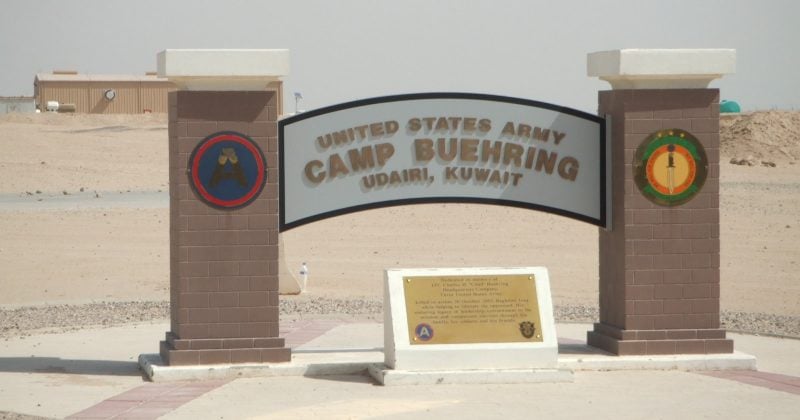
Iran’s Islamic Revolutionary Guard Corps launched missile and drone strikes targeting US military installations in Kuwait and Bahrain on June 28, marking a significant escalation in a conflict that has been simmering since early 2026. The IRGC claimed to have struck eight sites, including Ali Al-Salem Air Base in Kuwait and the US 5th Fleet base in Bahrain.
Kuwaiti and Bahraini forces intercepted most of the incoming projectiles. No US casualties were reported, and damage was described as limited.
What happened on the ground
The strikes involved a combination of ballistic missiles and drones. The IRGC framed the offensive as retaliation for prior US airstrikes on Iranian targets, part of a tit-for-tat cycle that has defined the 2026 conflict.
Both Kuwait and Bahrain host critical US military infrastructure in the Gulf. Ali Al-Salem has served as a logistics hub for American operations in the region for decades. The 5th Fleet base in Bahrain is the nerve center of US naval operations overseeing the Strait of Hormuz, the narrow waterway through which roughly a fifth of the world’s oil supply passes daily.
Iran’s messaging after the strikes carried a pointed warning: continued US military actions could jeopardize ongoing peace negotiations.
The broader conflict has been building since February, with repeated exchanges of strikes between the US, Israel, and Iran throughout the spring.
How crypto markets reacted
Bitcoin dipped to around $99.5K in the immediate aftermath as traders moved to reduce risk exposure, then rebounded past $102K as markets digested the limited damage and lack of casualties.
Oil prices also climbed on the news. Rising energy costs feed into inflation expectations, which influence central bank policy, which in turn shapes the liquidity environment that risk assets like Bitcoin trade in.
Trading volumes spiked during the initial sell-off and subsequent bounce, suggesting that much of the price action was driven by short-term positioning rather than any fundamental reassessment of Bitcoin’s value proposition.
What this means for investors
Bitcoin’s behavior during these events reveals something interesting about its evolving identity. It doesn’t act purely as a safe haven asset the way gold does during military escalations, but it also doesn’t collapse like a speculative tech stock. It experiences short-term drawdowns that tend to reverse within hours or days as long as the underlying conflict remains contained.
The key variable to watch is the Strait of Hormuz. If Iran were to directly threaten shipping through that chokepoint, rather than targeting military bases, the market response would likely be far more severe and sustained.
The BTC dip to $99.5K was relatively mild, but leveraged positions that assumed $100K as a floor learned an uncomfortable lesson, however briefly. The rebound past $102K bailed out some of those trades.
Disclosure: This article was edited by Editorial Team. For more information on how we create and review content, see our Editorial Policy.














 English (US) ·