
 3 weeks ago
25
3 weeks ago
25
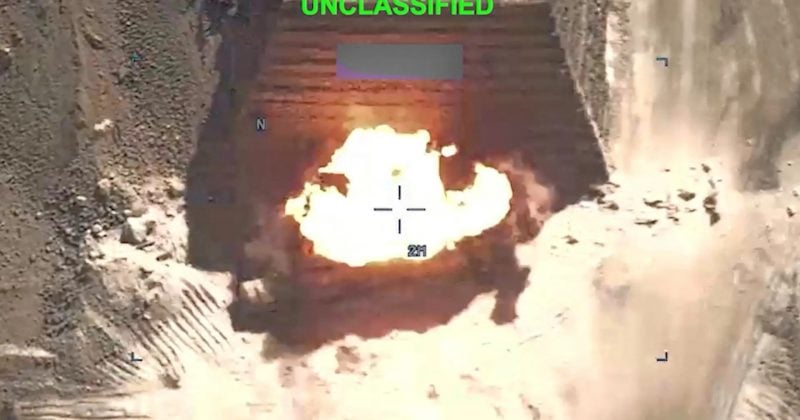
Iran’s Islamic Revolutionary Guard Corps announced it repelled a US attack on Sirik Island and launched a retaliatory strike against a US-linked air base. The exchange marks another escalation in what has become a dangerous pattern of military tit-for-tat in one of the world’s most strategically sensitive waterways.
Bitcoin responded the way it usually does when geopolitical risk spikes: it sold off. The largest cryptocurrency dipped below $73K as traders shifted into risk-off mode.
What happened in the Strait of Hormuz
The IRGC claims the US struck a telecommunications tower on Sirik Island, which sits in Iran’s Hormozgan province. In response, the Guards say they hit a US-affiliated air base, promising further “quick and firm” retaliation.
No official confirmation from the US side has surfaced regarding either the alleged initial strike on Sirik Island or the IRGC’s claimed retaliatory action. Iranian state media has been the primary amplifier of the IRGC’s version of events.
Hormozgan province borders the Strait of Hormuz, a narrow chokepoint through which roughly 20% of the world’s oil shipments pass every day. This incident is part of a broader pattern of hostilities between the US and Iran throughout 2026, with strikes and counter-strikes occurring across early-to-mid June.
Why crypto cares about a conflict in the Persian Gulf
Bitcoin’s slide below $73K represents a breach of what many traders considered a key support level. When that happens, it often triggers additional selling from automated trading systems and leveraged positions getting liquidated.
No specific crypto protocols or tokens were directly affected by the military exchange. The impact was broad-based, reflecting general market anxiety rather than any crypto-specific development.
The oil factor and its ripple effects
The Strait of Hormuz dimension adds a layer of complexity beyond standard geopolitical risk pricing. If hostilities escalate enough to disrupt shipping through the strait, even temporarily, the consequences for global energy prices would be severe. Higher oil prices feed directly into inflation expectations, which drive central bank policy — arguably the single most important macro variable for crypto prices.
Disclosure: This article was edited by Editorial Team. For more information on how we create and review content, see our Editorial Policy.













 English (US) ·