
 1 month ago
30
1 month ago
30
Iran’s parliamentary speaker Mohammad Bagher Ghalibaf has spent weeks making one thing clear: if the US wants to negotiate, it needs to show good faith by unlocking Iranian money first. The $6 billion in frozen funds held in Qatar, originally transferred there under humanitarian waivers during a 2023 prisoner exchange, has become the opening bid in what may be the most consequential round of US-Iran diplomacy in years.
In May 2026, US Treasury actions under Operation Economic Fury froze nearly $500 million in digital assets linked to Iran, adding a crypto-specific dimension to an already tangled web of sanctions, frozen accounts, and geopolitical chess moves.
The money on the table
Iran’s frozen asset problem is enormous. The country has over $100 billion in assets held across various countries, with the US alone holding between $38 billion and $52 billion. The UK accounts for roughly $6 billion more, and the EU holds around $18 billion.
The $6 billion in Qatar has a specific history. It was transferred there in 2023 as part of a deal that freed American prisoners held in Iran. The funds were routed into Qatari accounts under US humanitarian waivers, meaning they were supposed to be used for food, medicine, and other non-military goods.
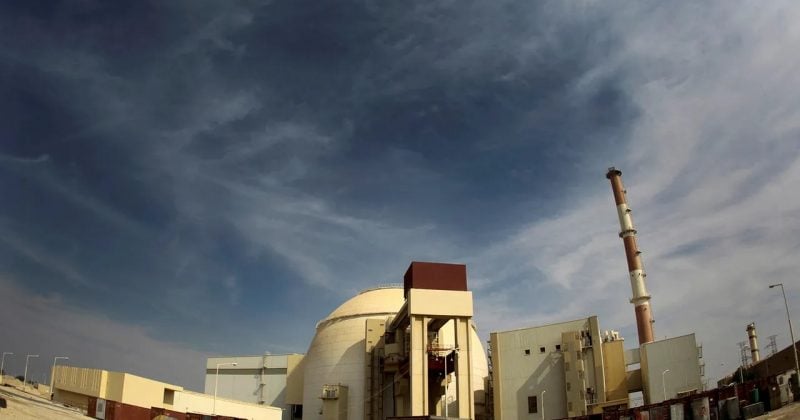
Now, Ghalibaf is framing access to those funds as either a confidence-building measure or an outright precondition for continued talks. The negotiations themselves are ambitious in scope, covering a long-term end to regional conflicts, the reopening of the Strait of Hormuz, and meaningful constraints on Iran’s nuclear capability.
US officials have denied any agreement on unfreezing the Qatar-held funds. But the discussions have reportedly included proposals ranging from the $6 billion humanitarian release up to $20 billion or more in exchange for concessions on Iran’s enriched uranium stockpile.
Where crypto enters the picture
The nearly $500 million in Iranian-linked digital assets seized under Operation Economic Fury in May 2026 underscores how seriously the US is treating crypto as a sanctions enforcement vector. Iran has long been suspected of using digital currencies to circumvent sanctions, with USDT and other dollar-pegged stablecoins reportedly seeing increased usage in sanctioned economies for exactly this reason.
The timing is notable. Freezing digital assets while simultaneously negotiating their traditional counterparts suggests the US is using crypto enforcement as leverage, or at minimum, as a way to demonstrate that alternative financial routes won’t provide an escape hatch from the broader sanctions regime.
What this means for crypto markets
If negotiations collapse, the US could intensify sanctions enforcement, potentially targeting a broader swath of digital asset infrastructure linked to Iranian economic activity. That would increase regulatory pressure on exchanges, mixers, and privacy-focused protocols.
Every time a sanctioned state is credibly linked to digital asset usage, it strengthens the hand of regulators pushing for stricter KYC requirements, transaction monitoring, and platform liability. The $500 million seizure is ammunition for those who argue the industry needs tighter controls.
A deal that brings Iran partially back into the traditional financial system could paradoxically reduce pressure on crypto regulation, by making digital workarounds less necessary. A breakdown in talks would likely produce the opposite effect, with more seizures, more designations, and more compliance burdens for the entire industry.
Disclosure: This article was edited by Editorial Team. For more information on how we create and review content, see our Editorial Policy.









 English (US) ·