
 1 month ago
26
1 month ago
26
Key takeaways
- The overwhelming amount of information today has impaired our ability to analyze it effectively.
- The US is shifting its security strategy to emphasize burden sharing with allies.
- The era of conflict between Israel and Iran is transitioning, impacting regional stability.
- The US aims to build a burden-sharing architecture in the Middle East to address threats from Iran.
- The US cannot adopt an isolationist stance without addressing existing geopolitical issues.
- Stabilizing the Middle East is a prerequisite for the US to reduce its involvement in foreign conflicts.
- The US is navigating a complex political landscape in its foreign policy, especially with Iran.
- The current US administration cannot revert to the previous nuclear deal without significant changes.
- The US approach to Iran involves sanctions and limited military action to influence negotiations.
- The Iranian regime is perceived as weak due to internal protests and economic collapse.
- Information overload is affecting public discourse and decision-making.
- The US is retrenching from direct involvement in Eurasian conflicts.
- The geopolitical landscape requires understanding US foreign policy shifts in global conflicts.
- The US seeks a stable equilibrium in the Middle East before reducing foreign involvement.
- The political dynamics of US-Iran relations are historically complex and challenging.
Guest intro
Kamran Bokhari, PhD, is Senior Director of the Eurasian Security & Prosperity Portfolio at the New Lines Institute for Strategy and Policy. He previously served as a senior analyst at Geopolitical Futures and as Central Asia studies course coordinator at the US Department of State’s Foreign Service Institute. Bokhari is a leading expert in geopolitical analysis of the Middle East, South Asia, and Central Asia.
The impact of information overload
- The exponential increase in available information has led to a decline in analytical capabilities.
-
We’re in an age where the amount of information available to people has just sort of exponentially increased.
— Kamran Bokhari
- Effective analysis is crucial for engaging with complex topics in public discourse.
- The decline in analytical skills affects decision-making processes.
- Information overload can lead to misinformation and confusion in public understanding.
-
Our collective ability to analyze in a disciplined manner has tumbled significantly.
— Kamran Bokhari
- Understanding the impact of information overload is essential for informed public discourse.
- The challenge is to develop strategies to manage and analyze information effectively.
US strategic shift in Eurasian conflicts
- The US is focusing on burden sharing with allies rather than direct involvement in Eurasian conflicts.
-
The United States is not going to be doing the heavy lifting for security on the Eurasian landmass.
— Kamran Bokhari
- This shift involves retrenching from direct military engagements.
- The US aims to focus more on the Western Hemisphere.
-
We’re gonna leave in different regions, we’re gonna shift this burden and share this burden with allied and partner nations.
— Kamran Bokhari
- Understanding this shift is crucial for analyzing US foreign policy.
- The strategic shift impacts international relations and global security dynamics.
- The US is redefining its role in global conflicts through burden sharing.
Transition in Israel-Iran conflict
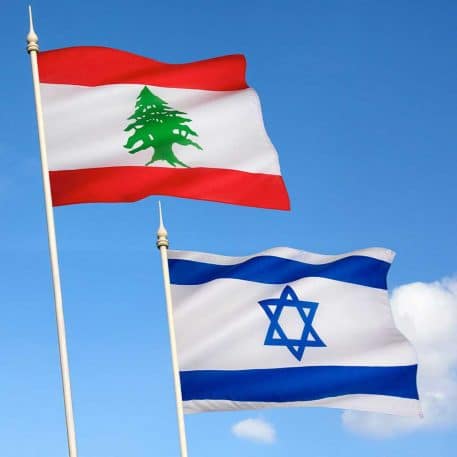
- The era of conflict between Israel and Iran is transitioning, affecting regional stability.
-
That era is coming to a close and that began in 2024 in the wake of the Hamas attack on October 2023.
— Kamran Bokhari
- Recent geopolitical events have significant implications for the region.
- The Israeli-Iranian relations are undergoing a significant shift.
-
You saw the Israelis weaken the Iranian proxy network and then take the war to Iran itself last June.
— Kamran Bokhari
- Understanding this transition is crucial for analyzing Middle Eastern geopolitics.
- The conflict’s evolution impacts regional power dynamics and stability.
- Future developments in the conflict are likely to reshape regional alliances.
US burden-sharing architecture in the Middle East
- The US is building a burden-sharing architecture in the Middle East to address threats from Iran.
-
The burden sharing burden shifting architecture that the US is trying to build has a preexisting threat.
— Kamran Bokhari
- This strategy involves collaboration with regional allies.
- Understanding US foreign policy strategies is crucial for analyzing Middle Eastern geopolitics.
- The US aims to address existing threats while reducing direct involvement.
-
It had to be dealt with.
— Kamran Bokhari
- The burden-sharing approach reflects a strategic shift in US foreign policy.
- This architecture aims to stabilize the region and address security challenges.
Challenges of US isolationism
- The US cannot adopt an isolationist stance without addressing existing geopolitical issues.
-
You can’t jump from the current moment to well no more wars.
— Kamran Bokhari
- Transitioning to a non-interventionist foreign policy is complex.
- Understanding the challenges of isolationism is crucial for analyzing US foreign policy.
- The US must address ongoing conflicts before reducing involvement.
-
That’s just not natural, that does not happen.
— Kamran Bokhari
- The complexities of US foreign policy require strategic planning and engagement.
- Isolationism without addressing existing issues can lead to instability.
US strategy for Middle East stability
- The US aims to stabilize the Middle East before reducing its involvement in foreign conflicts.
-
We are just going to leave the rest of the Middle East.
— Kamran Bokhari
- Stability is a prerequisite for US withdrawal from the region.
- Understanding US strategic interests is crucial for analyzing its foreign policy.
- The US seeks a stable equilibrium between Israel, Saudi Arabia, and Turkey.
-
We’re gonna set it up in hopefully a stable equilibrium.
— Kamran Bokhari
- The strategic approach emphasizes stability as a foundation for withdrawal.
- The US aims to reduce its military footprint while ensuring regional stability.
Navigating US-Iran relations
- The US is navigating a complex political landscape in its foreign policy with Iran.
-
The problem with Iran is that there’s a lot of hostility with the United States.
— Kamran Bokhari
- Historical and political complexities challenge negotiations with Iran.
- Understanding US-Iran relations is crucial for analyzing foreign policy dynamics.
- The hostility between the US and Iran dates back nearly half a century.
-
This is something that is politically very difficult to do.
— Kamran Bokhari
- Negotiations with Iran involve significant political challenges.
- The US faces difficulties in balancing diplomacy and military action.
Constraints on US nuclear deal approach
- The current US administration cannot revert to the previous nuclear deal without significant changes.
-
He can’t just do a slightly different version of the JCPOA that Obama did.
— Kamran Bokhari
- Political constraints require a new approach to maintain support from the base.
- Understanding the JCPOA and its implications is crucial for analyzing US foreign policy.
- The US administration faces challenges in negotiating a new nuclear deal.
-
It has to be substantively different for him to be able to keep his base happy.
— Kamran Bokhari
- The need for a new approach reflects political dynamics within the US
- The US seeks to negotiate a deal that aligns with its political interests.
US approach to Iran negotiations
- The US approach to Iran involves a mix of sanctions and limited military action.
-
The president decided okay let them do it okay and we’ll see and I’ll control it.
— Kamran Bokhari
- This strategy aims to influence negotiations with Iran.
- Understanding the geopolitical dynamics is crucial for analyzing US foreign policy.
- The US uses military action as a tool to change the mood in Tehran.
-
He’d let it go for twelve days there were three those three nuclear facilities.
— Kamran Bokhari
- The balance between military action and diplomacy is key to US strategy.
- The US aims to negotiate with Iran while maintaining strategic pressure.
Perception of Iranian regime’s weakness
- The Iranian regime is perceived as weak due to internal protests and economic collapse.
-
How do you negotiate with this regime that doesn’t seem to have its own house in order?
— Kamran Bokhari
- Internal challenges impact the regime’s stability and negotiation dynamics.
- Understanding Iran’s economic situation is crucial for analyzing US foreign policy.
- The US considers the regime’s weakness in its negotiation strategy.
-
Is it too weak do we really need to negotiate with it is it gonna topple?
— Kamran Bokhari
- The perception of weakness influences US foreign policy decisions.
- The dynamic situation in Iran presents challenges for US negotiations.
Disclosure: This article was edited by Editorial Team. For more information on how we create and review content, see our Editorial Policy.











 English (US) ·