
 1 month ago
9
1 month ago
9
Nvidia’s CEO just said the quiet part out loud. Jensen Huang told CNBC that Nvidia has “largely conceded” China’s AI chip market to Huawei, marking one of the most candid admissions from a major tech executive about the real-world consequences of US export restrictions.
The shift is dramatic. Nvidia held near-total dominance in China’s high-end AI chip market in 2024. That share has now dropped to near zero.
From dominance to disappearance
Huang described Huawei as “one of the most formidable technology companies” and pointed to the Chinese firm’s record year.
Huawei is now targeting shipments of 750,000 AI chips in 2026, with its Ascend 950PR model projected to capture approximately 60% of China’s domestic AI accelerator demand.
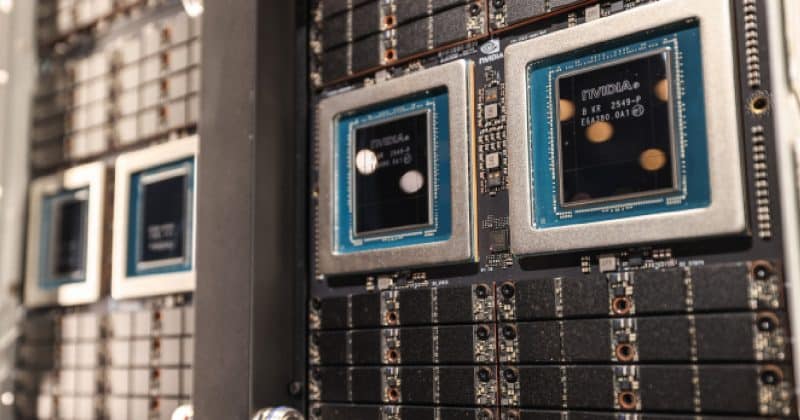
Nvidia’s product lineup has been systematically locked out of China. The A800, H800, and H20 series have all faced US export restrictions. Even attempts to ship lower-specification H200 chips have required licenses, and approvals from Beijing are currently stalled.
The DeepSeek warning
Huang raised another concern that deserves attention beyond the headline numbers. He warned about what happens when local AI models, like DeepSeek, become optimized specifically for Huawei’s chip architecture.
Once Chinese AI developers build their software stacks around Huawei’s capabilities, switching back to Nvidia chips becomes not just a procurement decision but a complete re-engineering effort.
Huang himself acknowledged that Chinese demand for AI chips remains high, and that local chip companies are performing well in the vacuum Nvidia left behind.
What this means for investors
The China-shaped hole in Nvidia’s revenue potential is significant, representing what was once tens of billions in potential income from the world’s most aggressive AI buildout.
The Blackwell and Rubin GPUs, Nvidia’s most advanced offerings, face the same export restrictions that sidelined earlier models. There’s no technical workaround that satisfies both US regulators and Chinese buyers’ performance demands.
The irony of Huang’s comments is hard to miss. US export controls were designed to slow China’s AI capabilities. Instead, they’ve accelerated the creation of a domestic competitor that Nvidia’s own CEO now calls formidable, one that’s posting record results and capturing the majority of a market Nvidia once owned outright.
Disclosure: This article was edited by Editorial Team. For more information on how we create and review content, see our Editorial Policy.










 English (US) ·