
 1 hour ago
1
1 hour ago
1
OpenAI now plans to spend roughly $750B on cloud computing through 2030, up from the $600B projection it floated earlier this year. That’s a 25% increase in projected spend in a matter of months, which tells you everything about how fast the AI infrastructure race is accelerating.
The revised figure, reported by the Wall Street Journal, reflects a wave of new capacity agreements as the company scrambles to lock up the computing power needed to train and run its next generation of AI models. For context, $750B is more than the current market capitalization of most publicly traded companies on Earth.
Project Camellia and the push to own infrastructure
The most interesting part of the spending increase isn’t about renting more cloud capacity. It’s about OpenAI deciding to build its own.
Project Camellia is a $20B data center campus in Effingham County, Georgia. It represents a strategic pivot: OpenAI’s first site where the company serves as lead designer and developer, rather than leasing space from an existing cloud provider.
To power the facility, OpenAI has contracted with Georgia Power for 3.2 gigawatts of electricity delivery between 2028 and 2032. To put that number in perspective, 3.2 gigawatts is roughly enough to power a mid-sized American city. AI models are, it turns out, extremely thirsty for electricity.
The company also hired Brent Mayo to run the project. Mayo previously helped build xAI’s Colossus facility in Memphis, which was one of the fastest large-scale data center buildouts in recent memory. Hiring the person who built your competitor’s supercomputer is a very Silicon Valley move.
The shift from renter to builder signals something important about OpenAI’s long-term thinking. When you’re spending at this scale, the economics of owning your infrastructure start to look a lot better than paying someone else’s margin on top of it.
The existing deal sheet
Project Camellia sits on top of an already massive pile of infrastructure commitments. OpenAI has deals with three of the biggest names in cloud computing, each carrying eye-watering price tags.
There’s a 6-gigawatt arrangement with Oracle. There’s a $138B deal with Amazon spanning eight years, which includes 2 gigawatts running on Amazon’s custom Trainium chips. And there’s a $250B incremental commitment to Microsoft Azure, OpenAI’s original and most significant cloud partner.
Add it all up and you start to see how the $750B figure materializes. These aren’t speculative numbers on a whiteboard. They’re contractual commitments with some of the largest companies in the world.
For traditional tech investors, the downstream effects are significant. Oracle, Amazon, and Microsoft are all booking massive multi-year revenue streams from these deals. The AI infrastructure buildout is becoming the single largest driver of capital expenditure across the entire technology sector.
The tension between ambition and revenue
Here’s the thing about spending three-quarters of a trillion dollars: you need to actually make the money to cover it.
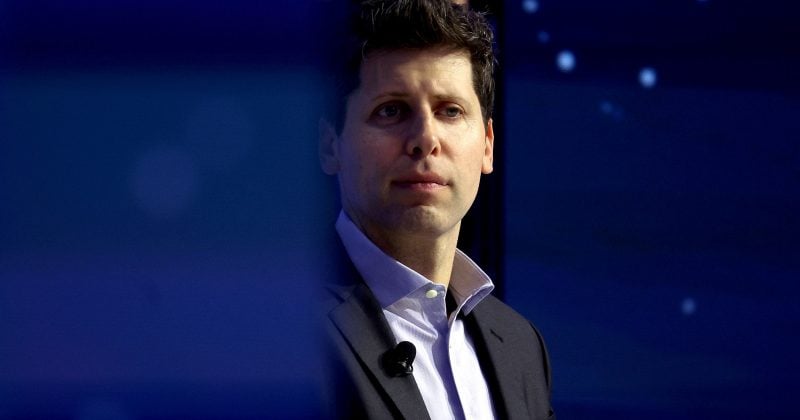
According to the WSJ, the spending trajectory has created friction between CEO Sam Altman and CFO Sarah Friar. Friar has privately raised concerns that OpenAI may not be able to pay for its future contracts if revenue growth doesn’t keep pace with infrastructure commitments.
This is the classic startup tension, just at a scale never before seen. Altman has consistently pushed for maximum compute capacity, operating under the thesis that more compute leads to better models, which leads to more revenue. Friar’s job, by contrast, is to make sure the checks don’t bounce.
OpenAI’s recent $40B funding round, the largest private fundraise in history, gives the company substantial runway. But $750B in projected spending dwarfs even that war chest by an almost absurd margin. The gap has to be filled by revenue growth, additional fundraising, or eventually, public markets.
The bull case is that OpenAI’s products generate enough subscription and enterprise revenue to sustain the investment. The bear case is that the company has signed binding contracts for infrastructure it can’t afford if growth slows or competition intensifies.
What this means for crypto and digital asset investors
OpenAI’s infrastructure binge isn’t directly connected to crypto or blockchain technology. But the second-order effects are worth paying attention to.
First, the energy angle. AI data centers are consuming power at an unprecedented rate. OpenAI’s 3.2-gigawatt contract with Georgia Power alone represents a massive claim on the electrical grid. Bitcoin miners, who have long competed for cheap electricity, are increasingly finding themselves in a bidding war with AI companies for power capacity. In some regions, this is already driving up energy costs for proof-of-work mining operations.
Several publicly traded Bitcoin mining companies have begun pivoting to offer AI hosting services alongside their mining operations, precisely because the infrastructure overlap is significant. Companies like Core Scientific and Hut 8 have already struck deals to provide data center capacity for AI workloads. The $750B spending projection only validates that strategy further.
Second, the compute scarcity thesis feeds directly into decentralized compute narratives. Projects building decentralized GPU networks have long argued that centralized AI companies would eventually face compute bottlenecks. OpenAI’s aggressive capacity lockup, contracting gigawatts of power years in advance, suggests that thesis has some merit, even if decentralized alternatives remain far from matching the scale that OpenAI requires.
Third, the sheer volume of capital flowing into AI infrastructure affects broader risk appetite in tech markets. When Microsoft, Amazon, and Oracle are booking hundreds of billions in AI-related contracts, it signals sustained institutional confidence in technology spending. That macro sentiment has historically correlated with risk-on behavior across digital assets.
The key risk to watch is whether Friar’s concerns prove prescient. If OpenAI’s revenue trajectory can’t support its commitments, the resulting financial stress could ripple through the entire AI supply chain, and by extension, the energy markets that crypto miners depend on. A $750B bet only works if the revenue shows up to match it.
Disclosure: This article was edited by Estefano Gomez. For more information on how we create and review content, see our Editorial Policy.













 English (US) ·