
 1 month ago
23
1 month ago
23
Polymarket is launching its own stablecoin, Circle (NASDAQ: CRCL) is taking flak for (once again) failing to help exploit victims, and Russia is urging African nations to get on board with this whole sanctions-evasion thing.
- Polymarket ditching USDC.e, Circle wrapping BTC
- Circle’s slow response to Drift exploit part of a pattern
- Tether gives investors the hard sell
- Stablecoins key to clearing Hormuz toll booth
- A7A5 eyes African expansion
On April 6, the Polymarket prediction market announced that it would be “upgrading the entire Polymarket exchange stack over the next 2-3 weeks,” a process that will include the launch of a new “collateral token.” This token, basically a new stablecoin called Polymarket USD, will see the platform move away from its current reliance on a bridged version of Circle’s USDC (USDC.e), although the new token will be “backed 1:1 by USDC.”
This move was sorta previewed in February, when Polymarket said it would transition from USDC.e to native USDC in the coming months. Polymarket said Monday this transition would be “seamless,” as the platform’s front-end “handles wrapping automatically with a one-time approval prompt.” However, “power users and API-only traders will need to wrap their USDC or USDC.e into Polymarket USD via the Collateral Onramp contract’s wrap() function.”
The shift has some users speculating that Polymarket could offer “yield” to customers willing to hold their new tokens on the platform. A war is currently being waged in Congress over whether to permit crypto platforms to offer “yield/rewards/interest” to users, but Polymarket isn’t based in the United States, so the platform may choose to do what it wants regardless of how this fight shakes out.
Meanwhile, Circle has announced plans to launch a “wrapped” version of the BTC token. The company says Circle Wrapped Bitcoin (cirBTC) will “integrate seamlessly into Circle’s established infrastructure and the wider DeFi [decentralized finance] ecosystem.” Circle CEO Jeremy Allaire said cirBTC would create “a neutral infrastructure for new applications for onchain BTC.”
For the moment, the “highly secure” cirBTC is targeted at institutions. While there’s no specific launch date, cirBTC will initially be launched on Ethereum and Circle’s own Arc payments network before supporting “crosschain usage and mobility” to realize a “multichain future.”
Circle’s former USDC partner, Coinbase (NASDAQ: COIN), launched its own version of wrapped BTC (cbBTC) in 2024 after delisting the BitGo-backed wBTC token due to the latter’s affiliation with the ever-controversial TRON founder Justin Sun. There are nearly 120,000 wBTC currently circulating in the wild versus just over 83,000 cbBTC.
Circle’s freezer on the fritz
While Circle has long held itself up as a more regulatory-friendly stablecoin option than its archrival Tether (issuer of the market-leading USDT), both companies have been criticized for failing to do enough to assist individuals and entities that become the victims of stablecoin-related crypto crime.
Circle came in for a fresh round of criticism last week following the $285 million exploit of the Solana-based Drift Protocol decentralized exchange. The April 1 exploit is believed to have been a “structured intelligence operation” perpetrated by a North Korean state-affiliated threat group previously linked to the October 2024 hack of Radiant Capital.
In short, the Drift exploit followed a six-month-long operation that saw individuals posing as members of a quantitative trading firm, approaching Drift execs at crypto conferences and proposing to integrate with Drift. The scammers even “deposited over $1 million of their own capital” and “built a functioning operational presence inside the Drift ecosystem” that allowed them to install malicious software, pull off their heist, and vanish.
A significant portion of the sum stolen from Drift was in USDC. Prominent blockchain sleuth ZachXBT accused Circle of being “asleep” while the attackers swapped “many millions” of this USDC from Solana to Ethereum via Circle’s own Cross-Chain Transfer Protocol (CCTP).
ZachXBT said these transfers went on for six hours, including “during US hours,” aka while most U.S.-based Circle staff were on the job. And yet, Circle failed to freeze or blacklist these stolen funds, despite this being an option for a centralized stablecoin issuer.
ZachXBT followed this up with a lengthy tweet-thread detailing Circle’s “$420M+ in alleged compliance failures since 2022, including fifteen cases of the US-regulated stablecoin issuer taking minimal action against illicit funds.” In one April 2024 incident linked to North Korea’s Lazarus Group, ZachXBT noted that Tether and two other stablecoin issuers—Paxos (BUSD) and Techteryx (TUSD)—responded almost immediately to law enforcement agencies’ wallet-freezing requests, while Circle took 4.5 months to respond.
ZachXBT summed up his thread by saying he wasn’t “hoping [Circle] collapse” but “the decisions they’ve made around compliance have had real consequences for real people … [Circle has] every tool and resource available to do better. They just haven’t … A US-regulated public company owes it to its users and the broader community to do better than this.”
Recall that it was only last September that Circle execs were publicly musing about the potential “reversibility of transactions” in cases of fraud. When this was met with criticism from blockchain purists, Circle CEO Allaire reminded them that the company had been researching “how to enable refunds,” including announcing a Refund Protocol smart contract one year ago.
Meanwhile, maybe don’t hire this guy as your next IT specialist.
Tether does the hard sell
Meanwhile, Tether is reportedly pushing investors to commit to participating in the company’s fundraising plans. On April 2, The Information reported that Tether’s on-again/off-again plans to raise billions of dollars at a valuation of $500 billion were back on. Tether reportedly gave investors a two-week deadline in which to decide whether to open their wallets, after which the company will decide whether to proceed with the endeavor.
Last September, Bloomberg reported that Tether was looking to sell up to 3% of the company for between $15-20 billion. But in February, the Financial Times claimed this ambitious financial target had been scaled back to just $5 billion, reportedly due to investors’ lingering concerns over Tether’s historic aversion to exposing its financial records to outside scrutiny.
These investor concerns are believed to have spurred Tether’s announcement last month that it had finally—after a decade of broken promises—hired a “Big Four” auditor to examine its books. This auditor was later revealed as KPMG, with PwC also being hired to help Tether “ready its internal systems for the audit.”
But there’s still no date for when Tether’s audit might be conducted, let alone released, raising questions regarding the urgency of Tether’s tight investor deadline. Others have similarly questioned Tether’s need to raise any outside cash, given its claims of generating $23 billion in profits in just the past two years.
It’s possible that Tether needs the cash to replace some of the less-traditional items in its reserve assets, including (as of December 31), $24 billion worth of gold bricks, $8.4 billion worth of BTC tokens, and $17 billion in “secured loans.” None of the above would qualify as reserve assets under the U.S. GENIUS Act, which limits stablecoin issuers to Treasury bills, cash, or something similarly liquid/reliable. Late last year, Tether’s non-traditional assets led S&P Global to assign USDT its lowest possible stability rating (‘weak’).
The Information cited anonymous investors expressing unease over Tether’s lofty valuation, which would rank the company higher than nearly every U.S. bank. Investors are also said to be wary of Tether’s lack of plans for an initial public offering, the usual method by which investors can recoup some of their stake.
Last week, Tether held an “intimate evening” in Miami Beach so senior execs could pitch investors on this opportunity face-to-face. No word so far on how it went, or how much “intimacy” Tether’s management was prepared to offer to seal this deal.
Tether toll in Hormuz?
A good chunk of Tether’s “secured loans” are believed to have been made to Wall Street firm Cantor Fitzgerald (NASDAQ: ZCFITX), which claims to hold over $122 billion in T-bills that Tether claims were among its reserves at the end of last year.
Bloomberg recently reported that, after Cantor founder Howard Lutnick was appointed U.S. Secretary of Commerce last year, he sold his Cantor stake to family trusts, one of which appears to have borrowed an undisclosed sum from Tether.
On May 6, Lutnick is scheduled to appear before the House Oversight and Government Reform Committee to answer questions regarding his relationship with deceased financier/convicted sex offender Jeffrey Epstein. The interview won’t be televised, but a transcript will reportedly be released at some point.
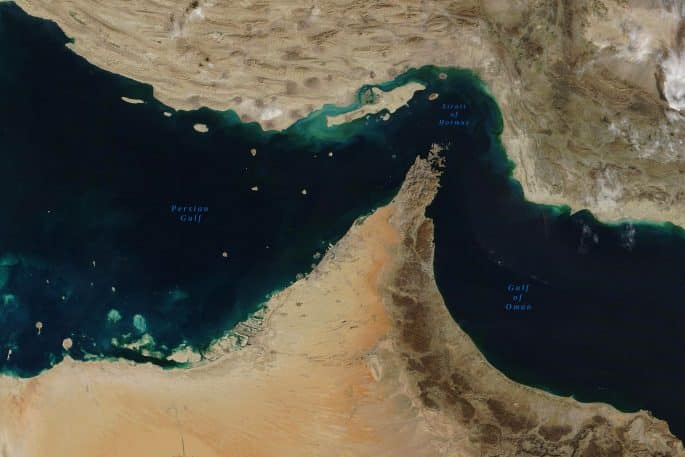
We’ll have to see whether any Committee members might have questions regarding Lutnick’s Tether ties, particularly given USDT’s apparent role in allowing commercial shipping to negotiate safe passage through the Strait of Hormuz. Bloomberg reported last week that large tankers capable of carrying two million barrels of oil each were being charged $2 million apiece to pass through the narrow waterway without being targeted by Iranian projectiles.
Bloomberg reported that these fees were being paid in Chinese yuan or stablecoins, and while the identity of these stablecoins wasn’t specified, Iran’s Islamic Revolutionary Guards Corps (IRGC) has shown a particular fondness for USDT when looking to evade U.S. economic sanctions.
Since the U.S. is effectively at war with Iran (Tuesday’s two-week truce notwithstanding), it remains to be seen if any House Oversight Democrats might query Lutnick on why his family is so closely aligned with a company that might be indirectly assisting Iran’s ability to fund its war efforts.
A7A5: the A’s stand for Africa!
While USDT might be the reigning sanctions-evading dollar-backed stablecoin champ, the ruble-backed A7A5 has been going pretty hard to that hoop since the token launched in January 2025. Both TRM Labs and Chainalysis have credited A7A5 with over half of all stablecoin-related sanction-evading volume last year.
A7A5 is issued by Kyrgyzstan-based Old Vector and A7 LLC’s founder is Moldovan national Ilan Shor, but the company is partially owned by Russia’s state-owned Promsvyazbank (PSB), a bank with deep military-industrial ties.
A7A5 also has the Kremlin’s blessing—A7A5 was the first token to earn Russia’s digital financial asset status—as a means of friction-free cross-border settlement for government departments and private businesses close to the seat of power.
Last September, Russian President Vladimir Putin personally presided over the opening of A7’s office in Vladivostok, where he celebrated A7A5’s role in boosting trade with Asian markets. In November, A7, PSB, and Russia’s Ministry of Finance formed a new company (Rosveksel) to handle financial transactions between Russian firms and foreign counterparties. In December, Russian Foreign Minister Sergei Lavrov told a Russian-African conference in Cairo that the A7 network was the country’s “first international financial platform” and invited “all other African partners” to join the party.
American, British, and European Union authorities have imposed sanctions on A7-affiliated companies and digital asset exchanges like the Kyrgyzstan-based Grinex that are the token’s primary conduits. Nonetheless, the token’s market cap is either just under or just over $500 million, giving it a one-third share of the non-dollar stablecoin market (and a cap about $100 million greater than Circle’s euro-backed EURC).
A7’s director of international development, Oleg Ogienko, said in February that the token was in high demand with businesses in Asia, Africa, and South America that conduct cross-border trade with Russian entities. Now, a new report from the Centre for Information Resilience (CIR) says the A7 network is “entering a new phase in which it is more directly integrated into the machinery of the Kremlin’s strategic and military operations internationally.”
The CIR says A7 is expanding its African footprint beyond the offices it opened in Nigeria and Zimbabwe last September. Among the Russian dignitaries at those ceremonial openings was Deputy Finance Minister Ivan Chebeskov, while both African countries’ finance ministers were said to be in attendance.
In Nigeria, A7 has partnered with local firm Pilot Finance Limited, which claims to offer “cross-border payments, treasury and settlement solutions.” Pilot’s website domain was created a mere five days after A7 Nigeria’s main site, and CIR says “it is not clear to what extent Pilot Finance has independent operations beyond its work with A7 Nigeria.”
In January, an A7-linked delegation including PSB’s deputy chairman made undisclosed visits to Madagascar and Togo, both of which recently welcomed Russian military “instructors.” Last month, A7 placed ads looking for a country managers in Togo, Nigeria and Zimbabwe.
CIR said it was “a plausible hypothesis” that A7 could soon help finance African countries’ purchases of military gear from Russian entities. The apparent uneasiness on behalf of these local governments in publicizing their A7 ties may be due to their unwillingness to unnecessarily poke America in the eye, but their links to Russia’s sanctions-evading efforts seem to be getting harder to hide.
Watch | Tokenization in focus: Key insights from the Tokenize: LDN








 English (US) ·