
 4 weeks ago
32
4 weeks ago
32
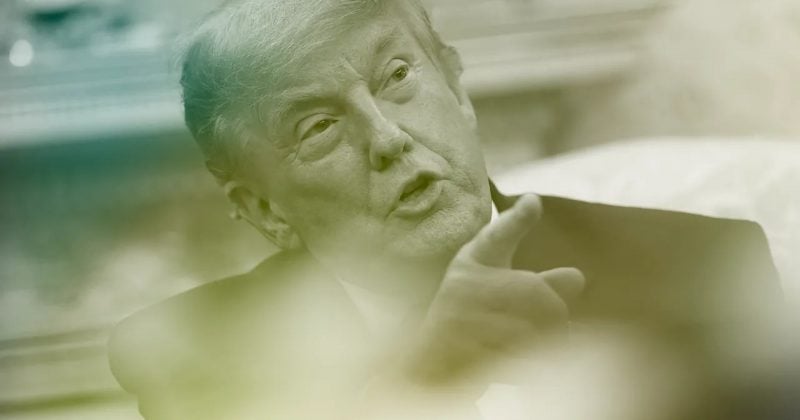
President Trump is pressing the U.S. Senate to pass its crypto market-structure legislation, although he still appears disinterested in doing the one thing that would almost certainly guarantee passage.
- Trump invokes Lindsey Graham’s ghost in renewed CLARITY push
- Lesser-known Trump crypto ventures struggling
- Circle celebrates national banking approval
- DoJ drops BitClub founder’s fraud charges
- Binance denies reports of reduced DoJ cooperation
Congress returned to work on Monday with a lot on its plate—and not a lot of time to finish what’s there—including the Senate passing its digital asset market structure legislation (CLARITY Act). But before they could even settle into their seats, Trump issued a Truth Social post calling on the Senate to pass CLARITY “in honor of Senator Lindsey Graham.”
Trump claimed Graham, who died suddenly over the weekend, was “a big supporter” of his, but Graham’s crypto stance was as complicated as his Trump support. Punchbowl News’ Brendan Petersen said Monday that he couldn’t recall Graham “talking about crypto / CLARITY in years.”
In 2023, Graham co-sponsored the Digital Asset Anti-Money Laundering Act, earning him criticism from crypto operators due to its plan to make block reward miners and transaction validators subject to conditions of the Bank Secrecy Act (BSA). But the bill failed to advance, and Graham did vote in favor of passing the stablecoin-focused GENIUS Act last year. However, his lack of overt public statements on crypto-focused issues doesn’t suggest deep concern over the issue.
In other words, Trump’s post looks less like a rousing call to action than a cynical ploy to play on the sympathies of Graham’s former Senate colleagues. As exhortations invoking fallen allies go, it isn’t exactly ‘win one for the Gipper.’
In case anyone saw through this gambit, Trump’s post also recycled old claims that “China, and many other countries, would like to take complete and total control of this major financial ‘happening,’ as well as [artificial intelligence] … Don’t let China win either subject!”
Among those who quickly retweeted Trump’s post were Sen. Cynthia Lummis (R-WY), White House crypto adviser Patrick Witt, former White House ‘AI & Crypto Czar’ David Sacks, and Michael Selig, chairman of the Commodity Futures Trading Commission (CFTC), the federal agency that would be tasked with the bulk of digital asset oversight under CLARITY.
But none of this CLARITY cheerleading made any reference to the single largest obstacle blocking the bill’s path: Trump’s apparent unwillingness to agree to the addition of language that might interfere with his family’s ability to profit from crypto ventures.
This so-called ‘ethics’ issue recently took on new urgency following the release of a 2025 financial disclosure report that showed Trump personally earned over $1 billion from his $TRUMP memecoin, the Trump-linked World Liberty Financial (WLF) platform, and other crypto-focused ventures. In fact, Trump earned more from crypto last year than any U.S.-listed crypto firm, including the Coinbase (NASDAQ: COIN) exchange.
Before Congress adjourned two weeks ago, Sen. Lummis claimed a new revised CLARITY text would be released over the break. That didn’t happen, but reports circulated last week about a new draft containing 70 additional pages, none of which reportedly addressed the ethics issue.
The Senate’s senior Dems continue to press for public hearings into Trump’s crypto profiteering, in particular the $500 million sale of a 49% stake in WLF to a fund linked to UAE government officials in January 2025.
While the Senate’s GOP leaders aren’t likely to approve such hearings, a press conference reportedly scheduled for this week will see Dems continue to make their case for ethics guardrails on the Trump family’s capacity to profit from legislation over which the president has influence.
ABTC, AIFC, JFC
While Trump’s disclosure showed him rolling in dough, some lesser-known Trump family crypto operations aren’t having the greatest time. Take American Bitcoin Corp (NASDAQ: ABTC), the block reward mining outfit that was spun off from miner Hut 8 (NASDAQ: HUT) in March 2025.
Like many crypto ventures, ABTC charged out of the stock market gates, but its share price fell 85% by year’s end. The price tanked below $1 in June and stayed there for an extended period, leading the Nasdaq exchange to warn the company that it violated its minimum $1 bid rules.
On July 2, ABTC conducted a 1-for-15 reverse stock split, reducing the number of outstanding shares from nearly 1.1 billion to ~73 million. But while the split temporarily increased ABTC’s share price, it didn’t arrest the downward trajectory. The post-split shares closed Monday at $5.29, down 13.8% on the day and nearly 38% over the past five days.
ABTC’s Q2 earnings report will be issued on August 3, and the dire state of the mining sector suggests there won’t be any rebound in the company’s financial performance. ABTC reported an $81.8 million net loss in Q1 after losing $59.5 million in Q425.
Things appear even worse over at the Trump-linked AI Financial Corporation (NASDAQ: AIFC), which in May announced a net loss of $271 million in the first quarter. AIFC also warned that there was “substantial doubt” the company would remain a going concern within a year.
On July 7, blockchain tech firm Perpetuals.com announced that it had signed a non-binding term sheet “to explore the potential acquisition of AI Financial Corporation’s profitable subsidiary Alt5 Sigma Canada, Inc.” Perpetuals’ chief strategy officer Matthew Nicoletti cautioned that his company is currently conducting due diligence and “no decisions have been made.”
ALT5 Sigma is the name AIFC operated under until April. Before that, ALT5 was known as JanOne. Its business focus has varied along with its corporate identities, ranging from appliance recycling to biotech to digital payments. And then there’s its most famous role, serving as a digital asset treasury for WLFI, the ‘governance’ token of the Trump-linked WLF.
That $1.5 billion treasury deal included WLF making a $750 million payment in WLFI, making WLF the biggest investor in ALT5. (ALT5 also agreed to buy another $750 million worth of WLFI via share sales to investors.) But on July 8, the Wall Street Journal reported that the proposed Perpetuals deal will see AIFC “sell its core business” to Perpetuals for “up to $15 million.”
Trading $750 million for $15 million might seem like a bad deal, although WLF printed those WLFI out of thin air, and Perpetuals is presumably paying in cash, so the Trumps likely aren’t sweating the difference.
As the Journal noted, the ALT5 treasury deal “served mostly to channel more than half a billion dollars to the Trumps, in an instance of investors losing out while the presidential family rakes in cash.” The New York Times previously noted that $TRUMP memecoin investors collectively lost over $3.8 billion as the token fell 97% from its peak while the president earned $635 million in $TRUMP ‘royalties.’
AIFC’s share price is down nearly 52% since the year began, and Monday’s closing price of $0.53 is a fraction of the nearly $10 peak the shares enjoyed in the wake of last autumn’s headline-making WLFI deal.
You get a bank charter! And you get a bank charter!
On July 10, USDC stablecoin issuer Circle (NASDAQ: CRCL) announced that its First National Digital Currency Bank (FNDCB) offshoot had received national trust bank charter approval from the U.S. Treasury Department’s Office of the Comptroller of the Currency (OCC). The new bank will operate under the banner of Circle National Trust.
Circle CEO Jeremy Allaire celebrated what he called “a historic day” for the company that is “symbolic of a much bigger evolution in the architecture of the emerging internet financial system.”
While FNDCB will initially serve the needs of Circle and its affiliated entities, the long-term plan is to offer institutional clients “custodial services for digital assets, including stablecoins and other tokenized assets, held to the highest standards afforded under Federal national trust bank supervision.”
Friday’s news sparked a brief surge in Circle’s share price, which shot up from $63 to over $73. But this surge didn’t last, and Circle’s shares closed Monday down 4.75% to $63. Circle’s shares have struggled since the announcement earlier this month of a new dollar-backed competitor, Open USD’s corporate-friendly OUSDC stablecoin.
Circle was one of several crypto firms, including stablecoin issuers, to receive conditional approval of their OCC charter applications last December. Much of the motivation behind this push involves bringing custody of stablecoin reserve assets in-house, thereby eliminating the need to contract with third-party custodians like Anchorage Digital, the original crypto-friendly bank that received OCC approval in 2021.
Connectia Trust, an offshoot of Sony Bank, itself an offshoot of the Japanese electronics/entertainment colossus, filed its U.S. national trust bank application last October. On July 6, Sony Financial Group announced that this application had received conditional OCC approval, allowing Sony Bank to prepare for “the commercialization of businesses related to the issuance and management of U.S. dollar‑denominated stablecoins in the United States.”
Connectia’s application cited the possibility of issuing stablecoins, and Sony Bank quickly established a ‘strategic relationship’ with stablecoin infrastructure venture Bastion as its exclusive stablecoin issuance provider. The long-term goal is to ensure in-house stablecoin support “for the Sony Financial Group’s digital asset businesses.”
Connectia Trust has been established with $40 million in capital, and the first Sony stablecoin is expected to emerge sometime next year, following the OCC’s final thumbs-up.
In May, Sen. Elizabeth Warren (D-MA) accused OCC chief Jonathan Gould of rubber-stamping crypto charter applications by companies “that intend to engage in activities that appear to go far beyond the narrow set of activities permitted by law.” Of particular interest is the pending application of the Trump-linked WLF, issuer of the USD1 stablecoin.
In February, the OCC granted final charter approval to Erebor Bank, a crypto-friendly bank launched to fill the void left by Silicon Valley Bank (SVB), which was bailed out with billions in Federal Reserve rescue funds in 2023. (Erebor was recently reported to be looking to raise funds at a valuation of $8 billion, twice its value at the end of 2025, as Erebor’s deposits have quadrupled since March to over $4 billion.)
SVB didn’t actually disappear following its implosion, thanks to a takeover by a subsidiary of First Citizens Bank & Trust Company. Last month, SVB’s crypto-focused team issued a blog post celebrating the wonders of a BTC-backed “lending ecosystem that prioritizes collateralization and transparency.” Here we go again…
Fraud is bad… unless it isn’t
Since Trump returned to the White House in January 2025, the federal government has largely halted enforcement actions against crypto operators, a fact Trump reminded operators of last week. But federal agencies insist that they continue to act against cases of outright fraud, although their record on this score is decidedly mixed.
On July 7, the CFTC filed fraud charges against Argent Capital Management LLC and its founder, Trevor Vernon. Vernon is accused of running a bogus commodity pool that “traded equity index futures contracts, options on equity index futures, and crypto assets, among other purported investments.”
In reality, Argent was a Ponzi scheme, using funds from new customers to pay older customers, masking the “consistent and catastrophic losses” incurred through Vernon’s ill-advised trades. The CFTC claims the defendants solicited over $14 million from “at least 60” individuals. Vernon also allegedly lied to the CFTC under oath regarding his activities.
Meanwhile, on July 10, Bloomberg reported that the U.S. Department of Justice (DoJ) plans to drop charges against Matthew Goettsche, founder of the defunct BitClub Network, a different Ponzi scheme that fraudulently claimed to operate a block reward mining business.
While several other BitClub principals pleaded guilty to defrauding customers of $722 million, Goettsche assembled a legal team to fight his charges and/or negotiate a plea deal. The negotiations fell apart in February, reportedly over restitution for BitClub’s victims, leading then-Deputy Attorney General Todd Blanche to inform the court that the parties were heading to trial.
Some members of Goettsche’s legal team have personal ties to Trump, including Bradford Cohen, a former contestant on Trump’s reality TV series The Apprentice, and Brett Tolman, “a conservative criminal justice advocate who has helped clients secure Trump pardons.”
In June, Goettsche’s team filed a motion to dismiss the charges against their client, arguing that the lengthy period since the charges were filed in 2019 means Goettsche has been denied his constitutional right to a speedy trial. Senior DoJ official Aakash Singh then brought the parties together to discuss a potential resolution.
This apparently led to a deal under which criminal charges would be dismissed (with prejudice) while Goettsche would make some restitution to BitClub victims, whom Goettsche had variously referred to as “dumb” and “sheep,” while describing BitClub as being built “on the backs of idiots.”
On July 8, Goettsche’s team informed the court that the parties had reached an “agreement in principle to resolve the pending charges.” Geoettsche’s team hasn’t publicly commented on the report, but a DoJ spokesperson said it “routinely evaluates cases that have been pending more than a few years,” adding that the government would be “recovering a substantial amount owed to investors.” The spokesperson claimed the “DoJ’s decision here had nothing to do with any alleged pressure by Goettsche’s attorneys.”
Binance denies backsliding on law enforcement cooperation
The DoJ’s efforts to bring crypto crooks to justice could take a further hit following reports that Binance, the world’s top digital asset exchange by trading volume, had informed the lawmen that it would limit its cooperation on investigations of crypto crime linked to Binance users.
Last week, The Information reported on a DoJ internal memo warning prosecutors involved in crypto crime probes to expect a reduction in cooperation from Binance. The memo was issued last month by DoJ legal adviser Rachel Jones. Recipients included Kevin Mosley, one of the prosecutors involved in the case that led to Binance’s $4.3 billion settlement in November 2023 to resolve charges of money laundering and violating the BSA.
Jones reportedly told prosecutors that Binance would halt ‘courtesy’ freezes of digital assets on its platform that the DoJ believes are linked to criminal activity. Henceforth, Binance would require the DoJ to obtain legal authorization, including mutual legal assistance treaties (MLATs), before the exchange would agree to DoJ freeze/seize requests.
As part of its 2023 settlement, Binance was required to onboard independent compliance monitors from both the DoJ and the Treasury Department (DoT) to ensure no repeat performance of the activities that led to its settlement. In April, the Wall Street Journal reported that Binance had asked the DoT to either rescind or reduce its monitorship.
In May, The Information reported that DoT officials had demanded that Binance honor its compliance commitments, following reports that Binance had dismissed some compliance team members who’d discovered activity linked to Iranian efforts to evade U.S. economic sanctions. Subsequent reports found additional departures by staff involved in “sanctions, investigations and financial crime monitoring.”
Binance denied dismissing any compliance staff for uncovering illicit activity, and last week similarly denied that there’d been any change in its willingness to cooperate with U.S. agencies. A spokesperson told BeInCrypto that “there has been and will be no change to Binance’s cooperation with U.S. law enforcement … Binance will continue to cooperate with U.S. law enforcement requests in connection with their investigations as normal. Any suggestion that Binance has reduced or is reducing cooperation with law enforcement is wrong.”
Watch: Breaking down solutions to blockchain regulation hurdles










 English (US) ·