
 1 month ago
24
1 month ago
24
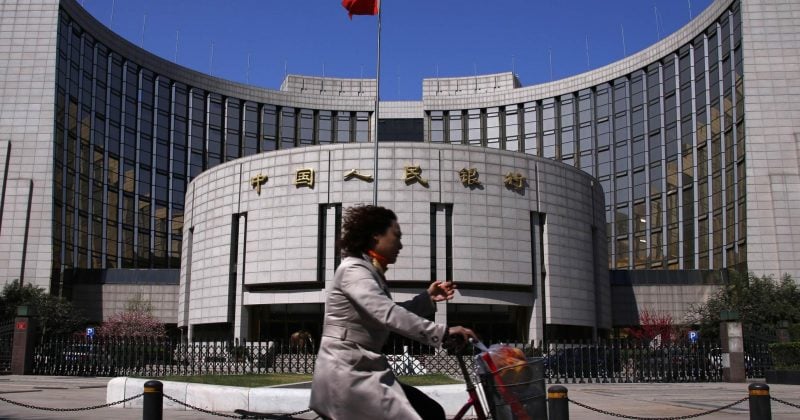
India’s central bank is rolling out the welcome mat for foreign money. The Reserve Bank of India issued an updated Master Direction on Foreign Investment in India on January 20, 2025, streamlining the rules that govern how overseas capital enters the country’s debt, equity, and government securities markets.
The revised framework is designed to simplify the process for foreign portfolio investors (FPIs) looking to park money in Indian assets. Investment limits for central government securities were set at approximately 4,62,490 crore rupees for the first half of FY 2026-27.
What the RBI actually changed
Simplified FPI rules for government securities investment sit at the center of the changes. Foreign portfolio investors have historically found India’s bond market appealing but operationally frustrating. The new framework is meant to reduce that friction, making it easier for global funds to buy and hold Indian sovereign debt.
A long road to regulatory modernization
The RBI’s most infamous regulatory moment came in 2018, when it issued a circular restricting banks from dealing with virtual currencies. That move effectively cut off crypto exchanges and businesses from the formal banking system.
The Supreme Court of India struck down that circular on March 4, 2020, ruling that the blanket ban was disproportionate. The decision reaffirmed that banks could not use the invalidated circular to deny services to crypto-related businesses.
In 2021, the RBI went further with a clarification stating that banks could not reference the invalidated 2018 circular as a basis for limiting services to virtual currency entities.
The current foreign investment framework updates do not reference cryptocurrencies, tokens, or blockchain-based assets in any way. The Master Direction is focused squarely on traditional financial instruments: government securities, equities, and debt.
What this means for investors
The investment limit of roughly 4,62,490 crore rupees for central government securities in H1 FY 2026-27 gives a concrete sense of scale. For global fixed-income funds, that is a meaningful allocation opportunity.
For crypto-focused investors, the absence of any digital asset provisions in the updated foreign investment direction means that the regulatory gap persists. Foreign funds looking to deploy capital into Indian crypto ventures, token projects, or blockchain infrastructure still lack a clear, dedicated framework for doing so through official channels.
Disclosure: This article was edited by Editorial Team. For more information on how we create and review content, see our Editorial Policy.















 English (US) ·