
 1 day ago
2
1 day ago
2
The information provided in this article is for informational purposes only and does not constitute financial advice. Cryptocurrency investments carry a high degree of risk. Always conduct your own research.
The US Senate Banking Committee released a 309-page Crypto Clarity Act draft. It defines SEC and CFTC roles while adding strict stablecoin yield rules.

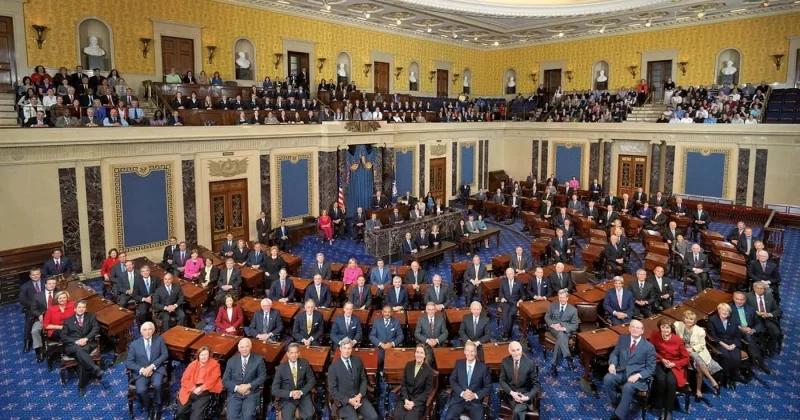
The US Senate Banking Committee has officially released an expanded 309-page draft of the Digital Asset Market Clarity Act, commonly referred to as the Clarity Act. This updated version, which grew from a 278-page draft seen in January, marks a significant step forward in establishing a federal regulatory framework for digital assets. The bill arrives at a critical juncture as the industry seeks to move beyond "regulation by enforcement" and toward statutory certainty.
Jurisdictional Split: SEC vs. CFTC Authority
Investors and industry participants asking whether the new draft changes the core jurisdictional split can rest assured: the fundamental division of labor remains. The Securities and Exchange Commission (SEC) is slated to oversee most initial token sales, while the Commodity Futures Trading Commission (CFTC) will govern the spot markets and trading of tokens once they are deemed sufficiently decentralized or "mature."
What is the "Clarity" in the Act
The Clarity Act is designed to be the "ultimate rulebook" for the US digital asset market. It seeks to define three main categories:
- Digital Commodities: Under CFTC jurisdiction.
- Digital Asset Securities: Under SEC jurisdiction.
- Payment Stablecoins: Governed by a combination of the Federal Reserve and state regulators.
By creating these legal buckets, the bill aims to eliminate the gray areas that have led to years of litigation between the SEC and major exchanges.
Expanded Investor Protections and Antifraud Measures
A major addition to the 309-page text is the strengthening of investor-protection language. The draft explicitly grants the SEC enhanced authority to pursue insider trading and antifraud cases involving specific crypto offerings. This move is seen as a compromise to win over skeptical lawmakers who argue that the crypto market remains a "Wild West" for retail investors.
 Tax season is right around the corner. Did you pick a crypto tax tool yet? Check out our comparison
The Stablecoin Yield Crackdown: No More "Bank-Style" Interest
One of the most contentious sections of the bill focuses on stablecoins. The draft aims to prevent crypto platforms from operating like unregulated banks. Under the new rules:
- Passive Yield Prohibited: Platforms are barred from offering "bank-style" interest just for holding payment stablecoins (like USDC or USDT) in an account.
- Activity-Based Rewards Allowed: The bill leaves the door open for rewards tied to staking, liquidity provision, governance, or loyalty programs.
This distinction ensures that while simple "interest-bearing" accounts are restricted to licensed banks, the functional utility of DeFi and blockchain ecosystems remains intact.
Refined Focus on Tokenization and the "Build Now" Surprise
The section regarding tokenization has been narrowed. While earlier versions used broad "real-world assets" (RWA) terminology, the current draft focuses more precisely on tokenized securities. This adjustment provides clearer pathways for traditional financial institutions to bring equities and bonds on-chain.
In a move clearly designed to garner broader political support, the draft now incorporates the "Build Now Act." This housing-related legislation has no direct connection to cryptocurrency but is a strategic "rider" intended to attract votes from senators focused on urban development and affordable housing.
What’s Next for the Clarity Act?
The Senate Banking Committee is expected to move toward a formal markup session soon. For the latest updates on how these regulations might affect specific assets, you can monitor the $Bitcoin price and other major tokens on our live tickers.













 English (US) ·