
 1 month ago
24
1 month ago
24

content, reviewed by leading industry experts and seasoned editors. Ad Disclosure
South Korean lawmakers are expected to review their crypto tax plan after a petition to abolish the long-delayed framework surpassed the required signatories to be discussed in the National Assembly.
Over 50,000 Koreans Sign Crypto Tax Petition
As South Korean authorities prepare to implement the upcoming Income Tax Act, a petition to block the crypto taxation system has gained massive support from South Korean investors and some policymakers.
The “Petition for the Abolition of Taxation on Virtual Assets” surpassed the signature requirement on May 21, just eight days after its registration. Notably, a petition must gather 50,000 signatures within 30 days of public release to be automatically referred to the National Assembly for review.
For context, crypto assets will be subject to an income tax rate of up to 22%, starting January 1, 2027, for profits exceeding 2.5 million won annually. The South Korean government proposed implementing the Income Tax Act by January 2022, but the rule change has been postponed three times.
At the time of writing, the request to abolish the government’s crypto taxation plans has gathered over 53,000 signatures on the National Assembly’s public petition board. Therefore, the petition will be reviewed by the Finance, Economy, and Planning Committee, which will decide whether to refer it to the Plenary Committee.
The petition argued that, with the recent abolition of the financial investment income tax to promote capital market development, it is difficult to justify forcing separate taxation for crypto assets.
“There are significant concerns that current policies are excessively focused on regulation and securing tax revenue, while neglecting consideration for industrial competitiveness and securing global market leadership,” the request affirmed, adding that, “If taxation is enforced solely for the sake of short-term revenue, it could lead to greater long-term losses, such as industrial contraction and the outflow of capital and talent.”
It also criticized the push to implement taxation before measures like short-selling regulations, listing reviews, investor protection funds, and unfair trading monitoring systems are sufficiently established.
Therefore, the petitioner considers that the crypto asset taxation system requires “a fundamental review rather than mere supplementation or postponement,” noting that the current system will only result in increased burdens on the public and a contraction of the industry. “Now is the time for a comprehensive re-discussion, including the possibility of abolition, rather than forcing through virtual asset taxation,” it reads.
However, previous reports suggest the chances of abolishing or postponing the crypto taxation plan are low, since parliamentary petitions rarely result in legislative change, and officials appear set on the 2027 implementation.
NTS Preparing Income Tax Act Implementation
Last month, the People Power Party (PPP) introduced a bill to amend the Income Tax Act to abolish the taxation of crypto assets. In the amendment, PPP’s floor leader, Song Eun-seok, proposed removing all provisions governing the taxation of digital assets in the current version of the Income Tax Act.
As reported by Bitcoinist, the bill argues that imposing a separate income tax on crypto assets raises concerns regarding the fairness and consistency of the tax system. In addition, it cites guidance from US financial regulators, which classified most digital assets as commodities rather than securities.
Despite these efforts, the National Tax Service (NTS) recently announced it had begun preparations to implement the crypto asset taxation framework next year. In late April, Park Jeong-yeol, Director of the Individual Taxation Bureau at the National Tax Service, outlined the agency’s plan to secure data from exchanges and establish a taxation system to ensure the swift execution of the comprehensive income tax.
The NTS is also accelerating the development of its tax infrastructure, including an AI-driven system to track crypto investment gains, which the agency expects to launch at full scale by the end of the year.
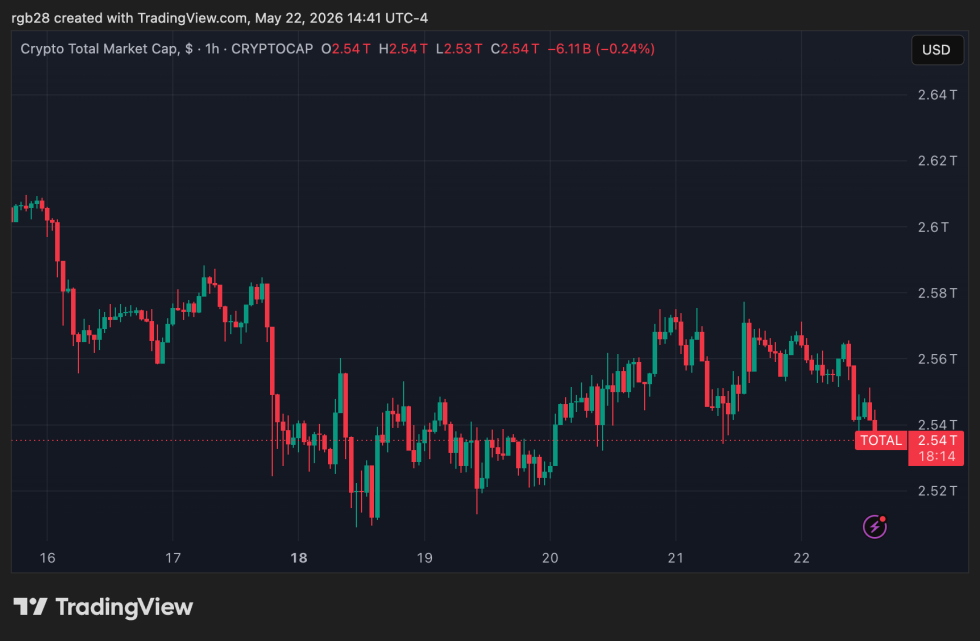
Featured Image from Unsplash.com, Chart from TradingView.com
Editorial Process for bitcoinist is centered on delivering thoroughly researched, accurate, and unbiased content. We uphold strict sourcing standards, and each page undergoes diligent review by our team of top technology experts and seasoned editors. This process ensures the integrity, relevance, and value of our content for our readers.















 English (US) ·