
 1 month ago
29
1 month ago
29
Khaldoon Al Mubarak, Chairman of the UAE Executive Affairs Authority and Managing Director of Mubadala, sat down with US Vice President JD Vance in Washington, D.C., to assess progress on a 10-year, $1.4 trillion economic and technology framework between the two countries. The meeting, which took place around June 5, 2026, is the latest checkpoint on what may be the most ambitious bilateral economic agreement in recent memory.
The numbers so far
The framework was originally unveiled on March 21, 2025, following discussions that included President Trump and Sheikh Tahnoon bin Zayed Al Nahyan. It committed the UAE to sweeping investments across sectors that Washington considers strategically vital: artificial intelligence, semiconductors, energy, and rare earth minerals.
In its first year, the UAE posted a $23.8 billion trade surplus with the US. Total bilateral trade between the two nations hit $39 billion by the end of 2025.
Al Mubarak’s meeting with Vance reportedly focused on operational efficiencies across priority sectors and reinforced existing agreements, including the US-UAE AI Acceleration Partnership. That partnership, part of the broader framework, is aimed at building out AI compute infrastructure and data center capacity, areas where the UAE has been aggressively expanding through entities like G42 and Mubadala’s own portfolio.
The political architecture
During his Washington visit, Al Mubarak also engaged with Treasury Secretary Scott Bessent and Commerce Secretary Howard Lutnick.
In January 2026, the UAE joined the US-led Pax Silica Declaration, an initiative designed to secure technology supply chains, particularly around semiconductor manufacturing and distribution. A month later, in February 2026, the two countries established a separate framework specifically targeting critical minerals cooperation.
What this means for investors
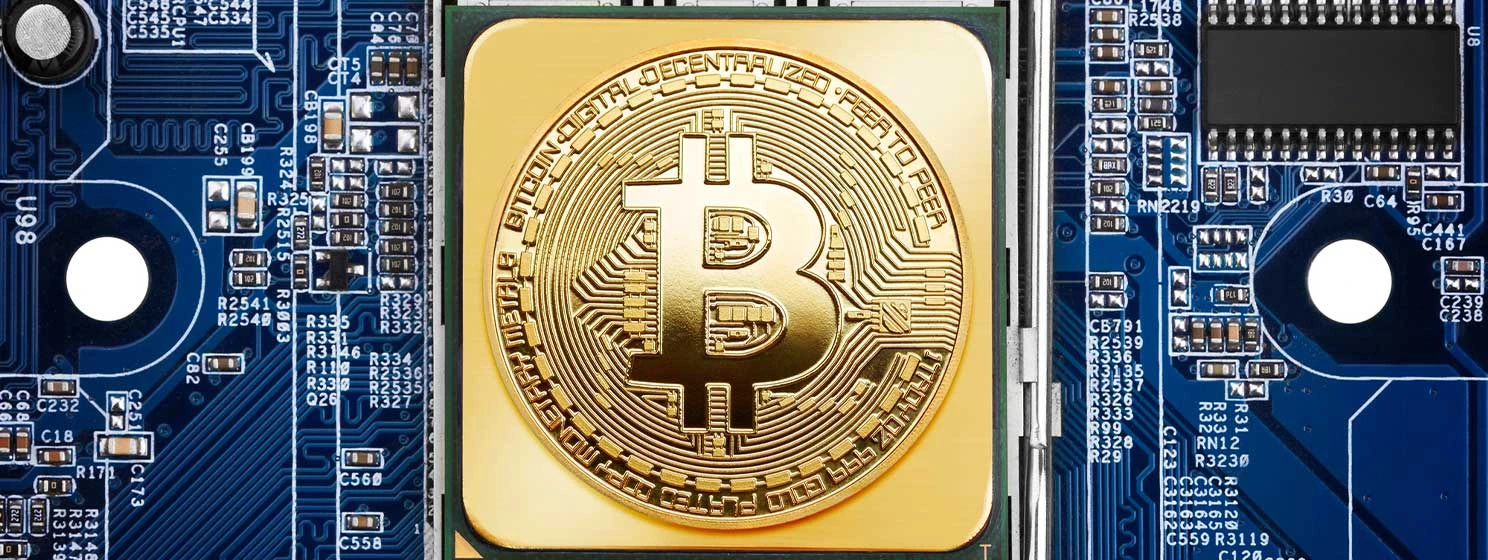
The critical minerals angle is worth watching. Rare earth elements are essential for manufacturing the GPUs and ASICs that power both AI training and crypto mining. A more secure, US-aligned supply chain for these materials could stabilize hardware costs over time, which would benefit miners and data center operators.
The UAE has positioned itself as one of the more crypto-friendly jurisdictions globally, with Abu Dhabi’s ADGM and Dubai’s VARA providing licensing frameworks for digital asset firms. Deeper economic integration with the US could influence how both countries approach cross-border crypto regulation, particularly around stablecoin flows and tokenized securities.
Disclosure: This article was edited by Editorial Team. For more information on how we create and review content, see our Editorial Policy.












 English (US) ·