
 4 weeks ago
24
4 weeks ago
24
Ukraine sent hundreds of drones toward Moscow on June 18, marking the largest aerial assault on the Russian capital since the full-scale invasion began in February 2022. The attack damaged buildings, sparked fires at a major oil refinery, and forced airports to suspend operations.
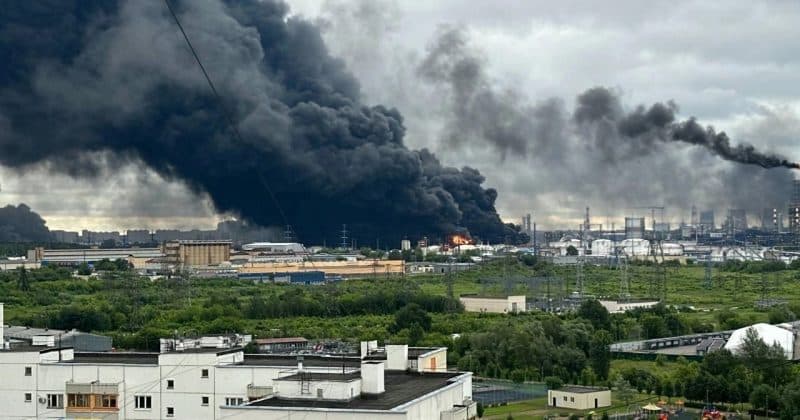
The primary target was the Moscow Oil Refinery in the Kapotnya district, a facility that supplies a significant share of fuel to the capital region. The refinery had already been hit just two days earlier, on June 16, and this follow-up strike reportedly cut its operational capacity in half. One of Moscow’s most important fuel nodes is now running at roughly 50% output.
What happened on the ground
Russian defense officials claimed their air defenses intercepted the majority of incoming drones, with various estimates placing the number of downed aircraft between 50 and 194. Fires broke out at the refinery, structural damage was reported across multiple areas, and debris from intercepted drones fell onto residential neighborhoods and at least one shopping center. No fatalities were reported in initial coverage, though injuries did occur as wreckage rained down on populated zones.
Airports in the Moscow region suspended operations during the attack, and local roads were closed as emergency services responded.
A pattern of escalation
Ukrainian President Volodymyr Zelenskyy framed the attack as justified retaliation for Russia’s recent assaults on Kyiv. The weeks leading up to June 18 saw intensified aerial attacks on Moscow, part of a broader trend in which both Russia and Ukraine have made long-range drones and missiles central to their military strategies.
The refinery in Kapotnya has now been hit multiple times in a single week. Ukraine’s domestic drone production capabilities have matured to the point of launching hundreds of drones at a target over 500 kilometers from the front lines.
What this means for energy markets and investors
The Moscow Oil Refinery is a meaningful node in Russia’s domestic fuel supply chain, and having its capacity halved, even temporarily, creates downstream pressure on refined product availability in the capital region. The repeated targeting of energy infrastructure is the variable to track. Refinery strikes that were once rare and symbolic are now frequent and operationally significant, with implications for oil futures, European energy security, and the risk premiums embedded in assets exposed to the conflict’s expanding geography.
Disclosure: This article was edited by Editorial Team. For more information on how we create and review content, see our Editorial Policy.












 English (US) ·