
 3 weeks ago
22
3 weeks ago
22
The US and Iran wrapped up two days of technical negotiations in Bürgenstock, Switzerland, on June 22, producing something tangible for the first time in months: a High Level Committee tasked with political oversight of nuclear protocols, sanctions relief, and maritime security in the Strait of Hormuz.
What actually happened in Switzerland
US Vice President JD Vance and Iranian Parliament Speaker Mohammad Bagher Ghalibaf led their respective delegations through the talks, which were mediated by Pakistan and Qatar. The discussions built on a Memorandum of Understanding signed on June 17, laying the groundwork for resolving the escalation of tensions that has defined the region since February 2026.
The newly established High Level Committee now has a roadmap targeting a final comprehensive agreement within 60 days from June 21. That puts the deadline somewhere around mid-August.
“When implementing a ceasefire and ending the war becomes difficult, we can resolve it either through missiles or through negotiations,” Ghalibaf told reporters while leaving Switzerland.
Iranian officials indicated a commitment to comply with international law while maintaining control over the Strait of Hormuz. Iran stated it would not revert Strait of Hormuz management to pre-war conditions, which means any deal will need to accommodate a new status quo rather than restore the old one.
A separate “de-confliction cell” was also established to manage potential conflicts in Lebanon, signaling that the talks are attempting to address the region’s interconnected security challenges rather than treating Iran’s nuclear program in isolation.
Why crypto traders should pay attention to an oil chokepoint
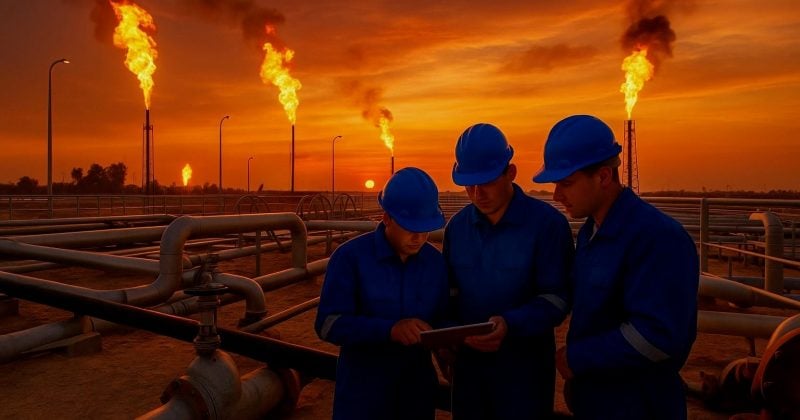
The Strait of Hormuz is the world’s most important oil transit bottleneck. Roughly one-fifth of global petroleum consumption passes through it daily.
The 60-day clock and what to watch
The roadmap’s 60-day timeline is ambitious. The Iran nuclear deal of 2015, formally the JCPOA, took years of negotiations before its final form materialized, and that deal eventually collapsed under the Trump administration’s withdrawal in 2018.
This time around, Pakistan and Qatar serving as mediators represents a shift from the European-led facilitation of the JCPOA era. The inclusion of maritime security and Lebanon-related de-confliction alongside nuclear protocols suggests a broader, more integrated framework.
Disclosure: This article was edited by Editorial Team. For more information on how we create and review content, see our Editorial Policy.









 English (US) ·