
 1 month ago
26
1 month ago
26
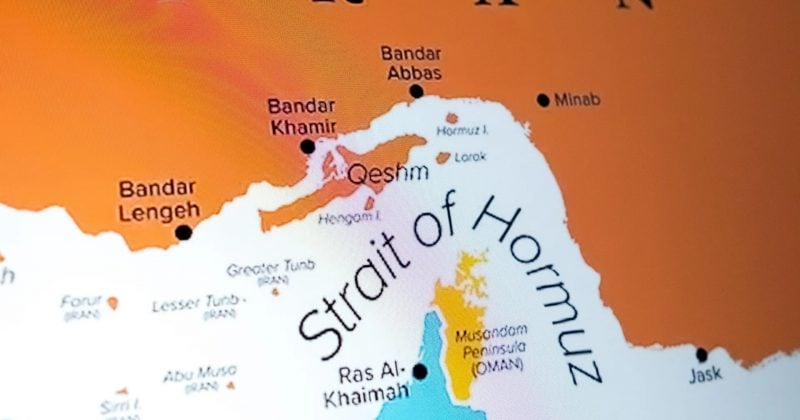
US Central Command shot down four Iranian one-way attack drones targeting the Strait of Hormuz on June 5, then followed up by striking Iranian coastal surveillance radar sites on Goruk and Qeshm Island. The goal: degrade Iran’s ability to threaten maritime traffic through a waterway that handles roughly 20% of global oil flow.
Bitcoin didn’t take the news well. Prices dropped below $77K as traders scrambled to de-risk, with liquidations across leveraged crypto positions reaching into the hundreds of millions of dollars.
What happened in the Strait
Iran launched four one-way attack drones toward the strait. US Central Command intercepted all four before they could reach their targets.
The US response went beyond simple defense. Military strikes targeted Iranian coastal surveillance radar installations on Goruk and Qeshm Island, two locations that give Iran eyes on vessel traffic moving through the chokepoint.
Multiple drone and missile exchanges occurred throughout May 2026, building toward this latest escalation.
Crypto markets caught in the blast radius
Bitcoin dropped below $77K in the immediate aftermath of the strikes, with some reports indicating prices briefly touched below $73K during the most intense selling pressure.
The liquidation numbers tell the more dramatic story. Leveraged positions across the crypto ecosystem got wiped out to the tune of $300 million to nearly $1 billion, depending on the timeframe measured.
The crypto-sanctions nexus
The US has seized approximately $1 billion in Iranian-linked crypto assets as part of sanctions enforcement efforts. Iranian entities have been exploring Bitcoin-settled maritime insurance platforms, essentially trying to build parallel financial infrastructure that can keep trade moving even under heavy sanctions.
What this means for investors
The oil-crypto correlation deserves attention. When Strait of Hormuz tensions push crude prices higher, the inflationary pressure that follows tends to weigh on risk assets broadly.
The sanctions enforcement angle introduces a different kind of risk. If the US government continues seizing Iranian-linked crypto at the scale it has been, that creates regulatory overhang for exchanges, DeFi protocols, and any infrastructure that might inadvertently process sanctioned funds.
Disclosure: This article was edited by Editorial Team. For more information on how we create and review content, see our Editorial Policy.














 English (US) ·