
 1 month ago
30
1 month ago
30
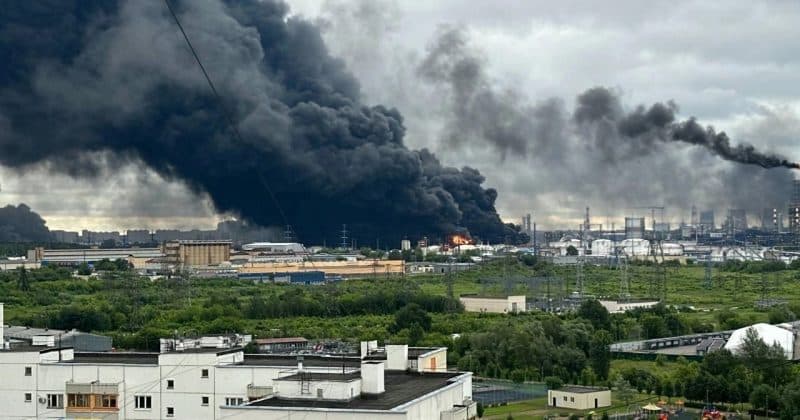
The US government has sanctioned Cuba’s state oil and gas apparatus as part of a broader escalation that now threatens foreign companies doing business on the island. The move comes while Cuba endures its worst energy crisis in decades, with blackouts lasting up to 22 hours per day in parts of the country, including Havana.
Executive Order 14404, issued on May 1, 2026, doesn’t just tighten the screws on Cuba directly. It empowers secondary sanctions, meaning foreign entities involved in Cuba’s energy, defense, metals mining, financial services, and security sectors are now in the crosshairs too. In English: if a company anywhere in the world helps keep Cuba’s lights on, it could find itself locked out of the US financial system.
What happened and why it matters
On May 7, the US officially designated GAESA and Moa Nickel S.A. as Specially Designated Nationals. GAESA is the Cuban military-linked enterprise estimated to control up to 40% of the country’s economy. Being slapped with SDN status is roughly the financial equivalent of being placed in solitary confinement. Any assets these entities hold under US jurisdiction are frozen, and Americans are broadly prohibited from dealing with them.
Cuba’s energy crisis has been intensifying since January 2026, when the cutoff of Venezuelan oil supplies began tightening the island’s fuel lifeline. Venezuela had long been Cuba’s most critical energy patron, and without that flow, diesel supplies were reportedly on track toward exhaustion by mid-May 2026. The result has been cascading failures across basic services, with healthcare facilities, schools, and water treatment systems all suffering from the rolling blackouts.
Widespread public protests have erupted across the island as Cubans contend with the compounding effects of fuel shortages, power outages, and crumbling infrastructure.
Six decades of embargo, but this is different
The US embargo against Cuba dates back to February 1962, when President Kennedy first imposed comprehensive trade restrictions. The Obama era saw a notable diplomatic thaw, while the Trump administration reversed much of that warming.
The introduction of secondary sanctions is the key escalation here. Previous rounds of US sanctions against Cuba primarily punished American companies and citizens for doing business with the island. Secondary sanctions extend that punishment to any foreign entity, regardless of nationality, that engages with designated Cuban sectors. This is the same playbook the US has used against Iran and Russia, and it forces foreign companies to choose between access to Cuba and access to the US financial system.
What this means for investors
The energy angle is also worth watching. Cuba’s crisis has been driven partly by the disruption of Venezuelan oil flows, which itself is a product of US sanctions policy toward Venezuela. If Venezuela’s ability to export oil continues to deteriorate under sanctions pressure, other Caribbean nations that rely on Venezuelan fuel under preferential terms could face similar supply disruptions.
Foreign companies with existing operations in Cuba now face a binary decision: wind down their involvement or risk US enforcement. When the US imposed secondary sanctions on Iran’s energy sector, major European oil companies abandoned Iranian projects within months, despite significant sunk costs.
Disclosure: This article was edited by Editorial Team. For more information on how we create and review content, see our Editorial Policy.










 English (US) ·