
 1 month ago
26
1 month ago
26
Elon Musk’s xAI has struck a partnership with Cursor, the AI-powered coding assistant, backing it with a $10 billion investment and an option to acquire the startup outright for $60 billion in 2026.
The structure here is worth unpacking. xAI is investing $10 billion into Cursor now, with an option to buy the company for $60 billion that becomes exercisable in 2026. If xAI decides to walk away from the acquisition, there’s a $10 billion breakup fee attached.
Cursor is currently running at roughly $2 billion in annual revenue. That’s a staggering number for a company whose flagship product, Composer, launched less than six months ago. In that short window, Cursor scaled its reinforcement learning capabilities by over 20x, which partly explains why xAI is willing to write such a large check.
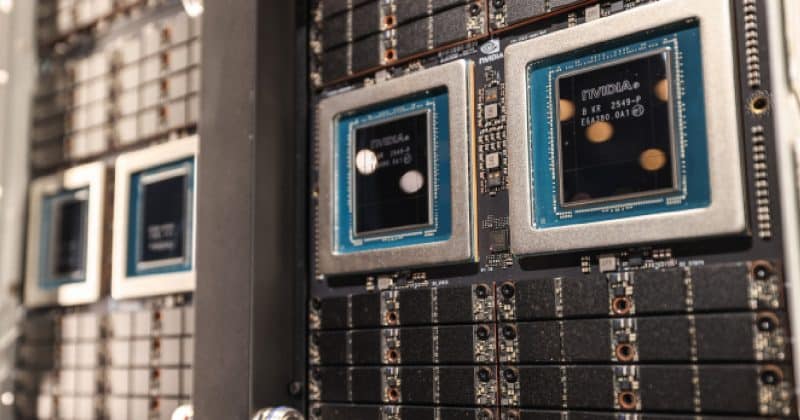
The partnership specifically addresses one of Cursor’s biggest bottlenecks: compute. Training competitive AI models requires enormous amounts of processing power, and xAI happens to operate Colossus, one of the most powerful AI datacenters in existence. By plugging Cursor into that infrastructure, the companies aim to accelerate model training in ways Cursor couldn’t achieve on its own.
The deal also has a SpaceX dimension. Cursor’s $2 billion revenue run-rate represents about 10% of SpaceX’s current revenue. For a company reportedly heading toward an IPO, diversifying revenue streams beyond rocket launches and Starlink subscriptions makes the financial story more compelling to public market investors.
Cursor’s investors are sitting in an enviable position. Andreessen Horowitz, Thrive Capital, and Accel all hold stakes in Cursor. If xAI exercises that $60 billion acquisition option in 2026, those firms would see massive returns on what were already well-timed bets on the AI coding wave.
A $60 billion valuation for a company generating $2 billion in revenue implies a 30x revenue multiple. There’s also the integration question: the $10 billion breakup fee suggests both sides recognize the possibility that a full acquisition might not ultimately make sense.
Disclosure: This article was edited by Editorial Team. For more information on how we create and review content, see our Editorial Policy.







 English (US) ·