
Getting an AI agent to follow a 15-step process without losing the plot halfway through has been one of the stubbornly hard problems in large language model development. Google researchers, working alongside collaborators from Georgia Institute of Technology and Peking University, think they’ve found a structural fix: Procedural Graphs. The paper, titled “Procedural Graphs: Self-Evolving Execution Structures for LLM Agents” and submitted to arXiv on September 8, describes a framework that ranked first or joint-first in 21 out of 24 model-benchmark settings. Long-horizon survival rates in enterprise simulations jumped from 6% to 34%. How procedural graphs actually work The core idea borrows from a concept most data engineers already know: knowledge graphs. Traditional knowledge graphs store facts as triplets, like (Paris, is-capital-of, France). Procedural Graphs apply the same logic to processes, organizing knowledge as (procedure, relation, procedure) triplets with specific conditions and guidance attached to each edge. Two components make this work in practice. First, a localization mechanism identifies which node in the procedural graph is currently active. Second, a guidance mo...
Google study shows procedural graphs enhance LLM agent performance
 3 weeks ago
26
3 weeks ago
26
Related

Qivalis receives EMI authorization from Dutch central bank f...
12 minutes ago
0
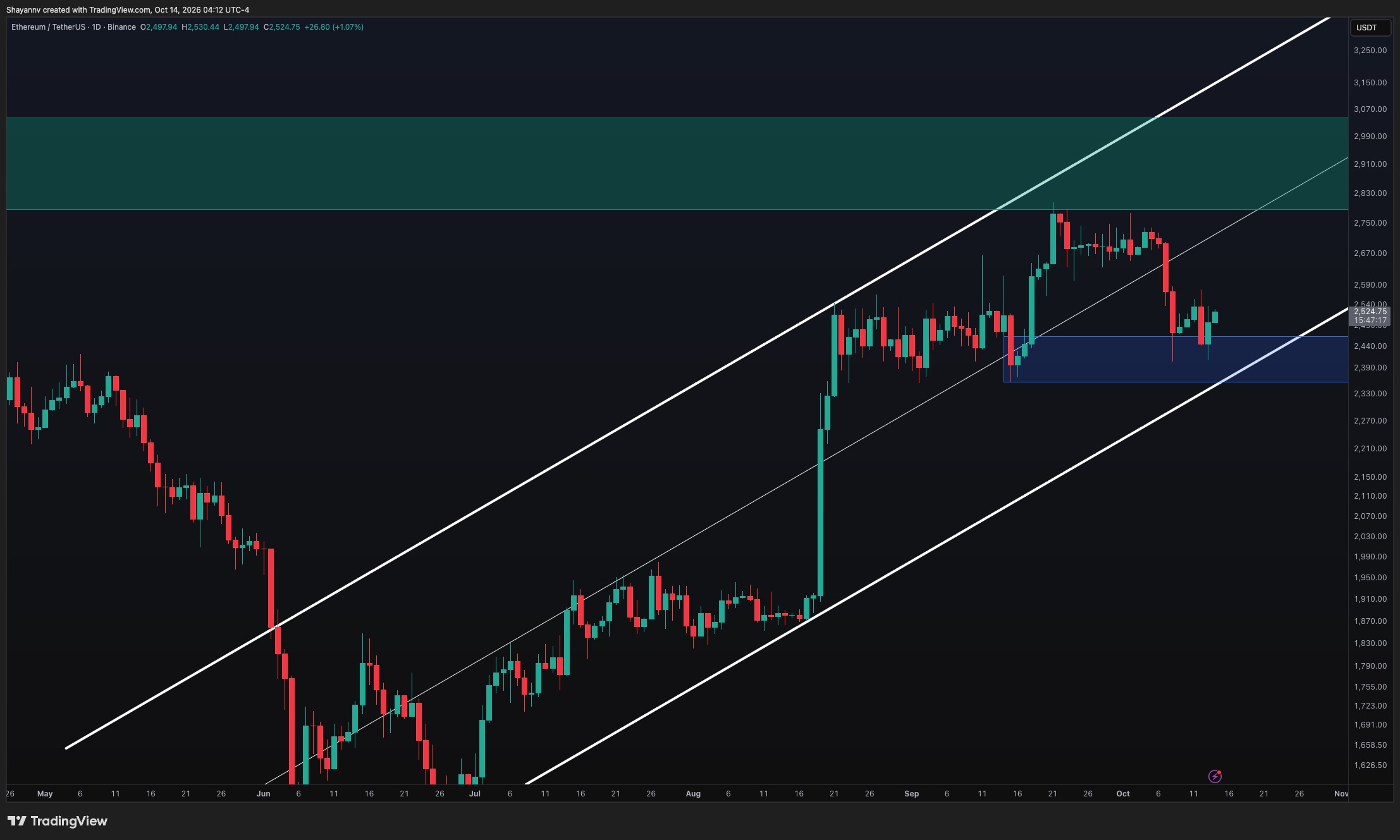
Ethereum Price Analysis: What’s the Worst-Case Scenario if E...
15 minutes ago
0

Bitcoin Price Plunges as September CPI Comes Out Higher Than...
30 minutes ago
0
What is a hardware wallet? How the device protects your keys...
36 minutes ago
0

Kraken parent to buy Lithuanian Saldo Bank amid TradFi expan...
40 minutes ago
0

Anthropic report finds robots can handle 74% of US physical ...
45 minutes ago
0
Evernorth taps Ripple, Kraken, Coinbase and BitGo to put its...
45 minutes ago
0

Solana ETF in Hong Kong at 0.6 percent: what changes for Eur...
46 minutes ago
0
Popular

Cardano Jumps 11 Percent: What ADA Holders Should Check Befo...
3 weeks ago
106


Bitcoin price tops $77K after BOJ lifts rates to 1.25%
3 weeks ago
75

Bitcoin price rebound faces major test at $83K
3 weeks ago
70




XRP logo lands on Louisville basketball court
4 weeks ago
63
 English (US) ·
 © Clint's Cryto News 2026. All rights are reserved
