
 2 weeks ago
72
2 weeks ago
72
Nvidia is doing something it has never done before: selling CPUs to Chinese hyperscalers. The company has begun pitching its new Vera CPU to clients in China, opening a revenue channel that sidesteps the export licensing quagmire that has plagued its GPU business for years.
The move is strategic in a way that only Nvidia can pull off. While its most powerful GPUs remain tangled in US export restrictions, CPUs like the Vera are perceived as less restricted, giving the company a cleaner path into one of the world’s largest data center markets.
What the Vera CPU actually is
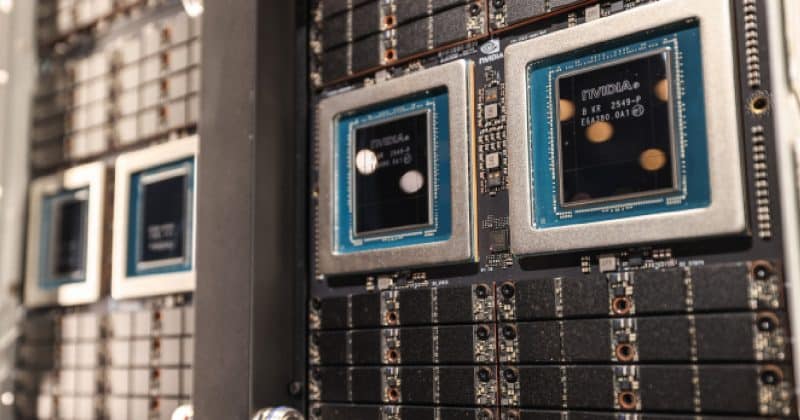
Unveiled in May 2026, the Vera CPU is Nvidia’s first custom Arm-based processor designed specifically for data center workloads. It packs 88 cores and claims up to 1.8x faster performance than competing x86 platforms.
The chip is purpose-built for what the industry calls “agentic AI workloads,” the kind of computing that powers autonomous AI agents capable of reasoning, planning, and executing multi-step tasks.
Vera is part of the broader Vera Rubin platform, which pairs these CPUs with Nvidia’s Rubin GPUs. The first systems were delivered in May 2026 to select AI labs.
Why China matters here
CEO Jensen Huang made the stakes explicit during a May 2026 earnings statement when he pegged the total CPU market opportunity at $200 billion, and specifically noted that figure includes China.
Early interest has materialized from exactly the clients you would expect. Alibaba and ByteDance, two of China’s largest hyperscalers, are identified as early adopters. Alibaba has gone a step further, reportedly securing racks for deployment.
The competitive and investor implications
Nvidia’s push into CPUs forces a rethink of the competitive landscape. Intel has been struggling to defend its data center market share for years, losing ground to AMD’s EPYC processors. Now both companies face a new challenger with deep pockets, a massive installed customer base, and the kind of brand cachet in AI that neither can match.
The Vera’s Arm-based architecture adds another dimension. Amazon has already proven with its Graviton chips that Arm can compete in the data center. Nvidia is now making the same bet, but with the added advantage of tight integration with its GPU ecosystem.
Global interest extends beyond China. Anthropic and OpenAI have also shown early interest in the Vera platform, suggesting that the chip’s appeal is not limited to markets where GPU access is constrained.
The risk, of course, is that US regulators decide CPUs deserve the same scrutiny as GPUs. Export control frameworks evolve, and a high-performance Arm chip designed for AI workloads could attract attention from the Bureau of Industry and Security.
Disclosure: This article was edited by Editorial Team. For more information on how we create and review content, see our Editorial Policy.















 English (US) ·