
 2 hours ago
3
2 hours ago
3
South Korea is betting big on becoming an AI superpower, and the price tag reflects it. The country’s government expects roughly 550 trillion won in private-sector investment across chips, AI data centers, batteries, displays, and electric vehicles, a figure that translates to approximately $380 billion at current exchange rates.
The bulk of that capital is coming from two corporate titans: Samsung Group and SK Group. Together, they’re planning to pour trillions of won into AI infrastructure over the next decade, a scale of investment that could reshape global semiconductor and data center markets.
Samsung’s trillion-won moonshot
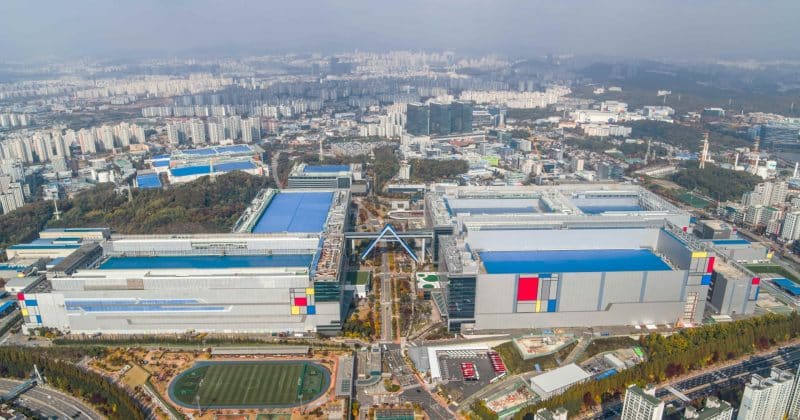
Samsung Group’s commitment alone is staggering. The conglomerate plans to invest over 1,000 trillion won, roughly $648 billion, by 2026 and beyond.
More than 350 trillion won of that total is earmarked specifically for AI infrastructure, including the construction of advanced data centers. The rest flows into Samsung’s traditional strongholds: semiconductors, batteries, and display technology.
Samsung Electronics is projected to achieve an operating profit of 550 trillion won by 2027, driven significantly by surging demand for AI servers.
SK Group and AWS pile on
Samsung isn’t operating in a vacuum. SK Group, South Korea’s other semiconductor heavyweight through its subsidiary SK Hynix, is reportedly planning collective investments of up to 1,100 trillion won for semiconductors and AI data centers.
The ambition extends to gigawatt-scale AI data centers, facilities that would consume as much power as small cities.
Foreign capital is flowing in too. Amazon Web Services is committing an additional 7 trillion won, approximately $4.9 billion, specifically for AI data centers in South Korea from 2025 to 2031. That brings AWS’s total investment commitment in the country to roughly 12.6 trillion won.
Why this matters for global markets
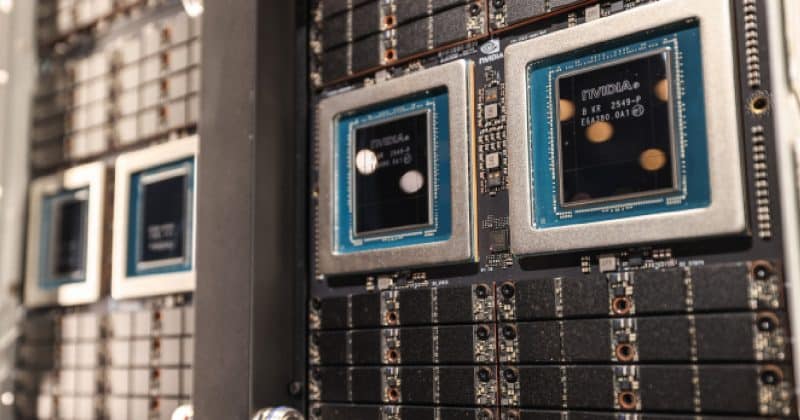
Here’s the thing about South Korea’s AI buildout: it doesn’t exist in isolation. Samsung and SK Hynix together control a dominant share of the global high-bandwidth memory market, the exact type of memory that AI training and inference demand in massive quantities.
Power infrastructure is the obvious bottleneck. Gigawatt-scale data centers require enormous, reliable electricity supply, and South Korea’s power grid wasn’t designed with this kind of concentrated industrial demand in mind.
The risk, of course, is cyclicality. The semiconductor industry has a long history of massive buildouts followed by painful corrections when demand doesn’t materialize as expected.
Disclosure: This article was edited by Editorial Team. For more information on how we create and review content, see our Editorial Policy.










 English (US) ·