
Getting a large language model to think faster usually means making it think worse. A new method called Uno claims to break that tradeoff, delivering up to 3x throughput improvements over standard autoregressive models while preserving the quality of every generated token. The technique, detailed in a paper titled “Unlocking Lossless Speedups in LLMs via Discrete Diffusion” (arXiv:2609.04010) published on September 3, 2026, works by grafting lightweight diffusion weights onto an existing autoregressive model. Instead of replacing the original architecture, it augments it, letting the model generate candidate token blocks in parallel while the base model acts as a quality referee. How Uno actually works Uno’s lead author Subham Sekhar Sahoo and collaborators introduce what they call Psi-Spec samplers, which use diffusion-based adapters to generate multiple candidate tokens simultaneously. The autoregressive weights stay intact and handle final verification, so the output quality matches what the base model would have produced on its own. The key insight is that diffusion models are naturally parallel. While autoregressive generation is inherently sequential (token B depends on token...
Uno achieves 2.5x higher throughput in LLMs by bolting diffusion onto existing models
 1 month ago
13
1 month ago
13
Related

Qivalis receives EMI authorization from Dutch central bank f...
13 minutes ago
0
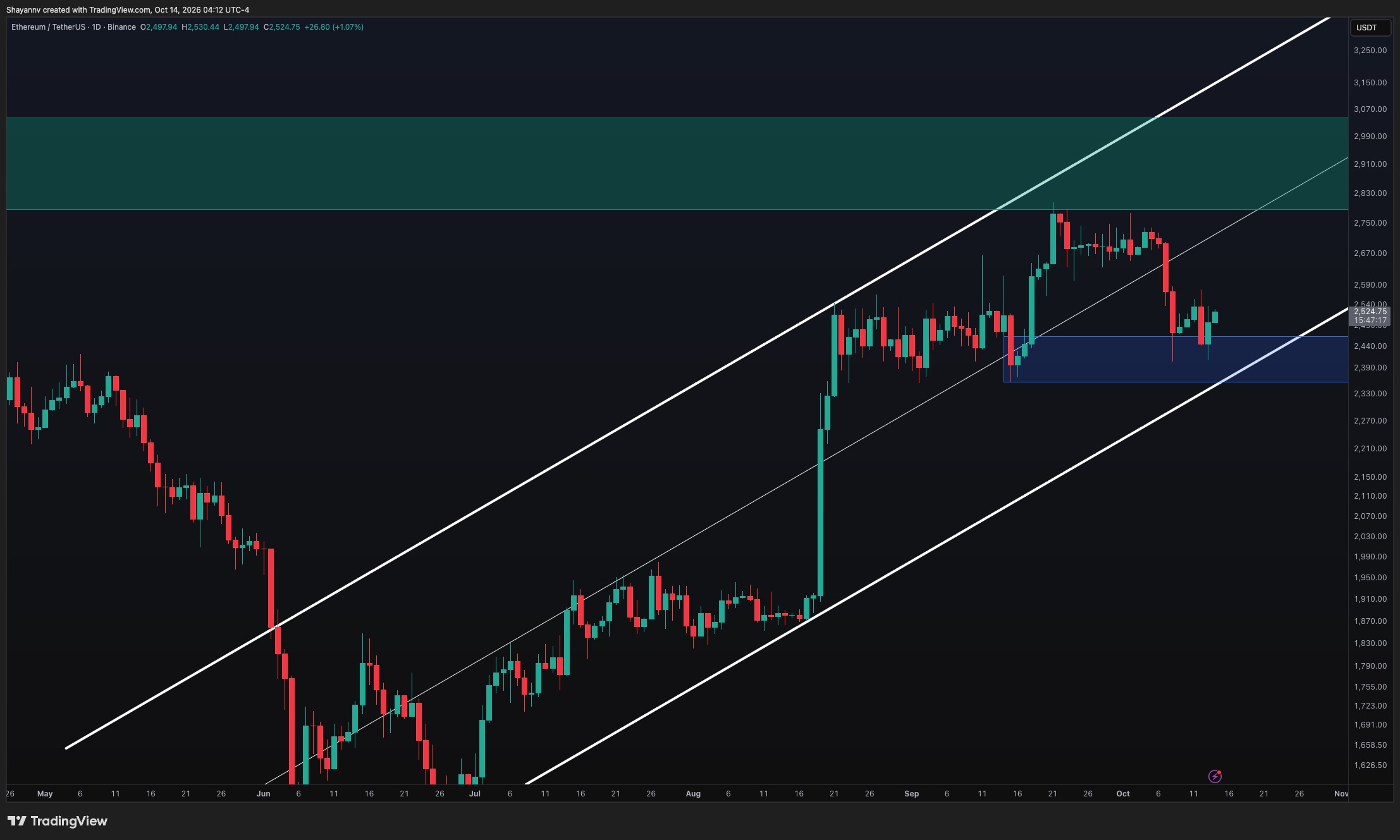
Ethereum Price Analysis: What’s the Worst-Case Scenario if E...
16 minutes ago
0

Bitcoin Price Plunges as September CPI Comes Out Higher Than...
31 minutes ago
0
What is a hardware wallet? How the device protects your keys...
36 minutes ago
0

Kraken parent to buy Lithuanian Saldo Bank amid TradFi expan...
40 minutes ago
0

Anthropic report finds robots can handle 74% of US physical ...
45 minutes ago
0
Evernorth taps Ripple, Kraken, Coinbase and BitGo to put its...
45 minutes ago
0

Solana ETF in Hong Kong at 0.6 percent: what changes for Eur...
47 minutes ago
0
Popular

Cardano Jumps 11 Percent: What ADA Holders Should Check Befo...
3 weeks ago
106


Bitcoin price tops $77K after BOJ lifts rates to 1.25%
3 weeks ago
75

Bitcoin price rebound faces major test at $83K
3 weeks ago
70




XRP logo lands on Louisville basketball court
4 weeks ago
63
 English (US) ·
 © Clint's Cryto News 2026. All rights are reserved
