
 1 month ago
31
1 month ago
31
US military forces boarded the sanctioned supertanker MT Davina in the Indian Ocean overnight on June 5, marking a significant escalation in Washington’s campaign to choke off Iranian oil revenues. The vessel, capable of carrying up to 2 million barrels of crude, was flagged by the Treasury Department’s Office of Foreign Assets Control back in October 2024 for transporting Iranian oil.
The boarding happened just three days after OFAC slapped sanctions on Nobitex and two other Iranian digital asset exchanges.
What happened with the Davina
The US Indo-Pacific Command confirmed the interdiction, describing it as part of ongoing efforts to disrupt Iran’s shadow fleet and illicit maritime networks. The operation was conducted without reported incident.
The Davina, also known as Lenore, is a stateless supertanker. That “stateless” designation matters: it means no country claims the vessel under its flag, which effectively strips it of legal protections under international maritime law and makes it fair game for interdiction.
The tanker was last tracked off the southern coast of Sri Lanka before US forces moved in. That location sits along well-documented maritime routes used for ship-to-ship oil transfers, a technique Iran’s shadow fleet has employed for years to move crude while dodging sanctions.
The crypto connection is real
On June 2, OFAC sanctioned Nobitex alongside other Iranian digital asset exchanges, citing their role in facilitating sanctions evasion and providing stablecoin access to the Islamic Revolutionary Guard Corps.
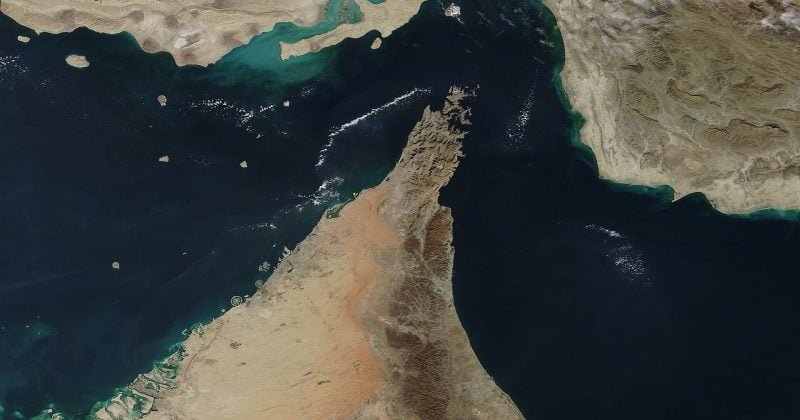
In April 2026, Iran confirmed it would accept Bitcoin for transit fees through the Strait of Hormuz. Whether that’s innovation or desperation depends on your perspective, but it’s undeniably a sign of how deeply digital assets have penetrated geopolitical finance.
The sanctioning of Nobitex is particularly notable because it represents one of the largest crypto exchanges operating in Iran. By targeting the on-ramps and off-ramps where Iranian users convert between rials and digital assets, OFAC is trying to close the same kind of evasion loop that the Davina boarding addresses on the physical side.
What this means for crypto markets and oil
For oil markets, the math is simple. Every tanker interdicted is crude that doesn’t reach buyers, mostly in Asia. The Davina alone could carry up to 2 million barrels.
For crypto markets, the sanctioning of Iranian exchanges reinforces the narrative that stablecoins and digital assets are being used by sanctioned regimes, which gives regulators in Washington and Brussels ammunition for tighter oversight. Every time OFAC adds a crypto entity to its Specially Designated Nationals list, it creates compliance headaches for every exchange and DeFi protocol that interacts with those addresses.
Iran’s stated willingness to accept Bitcoin for Strait of Hormuz transit fees represents something genuinely novel: a sovereign nation pricing a critical real-world service in cryptocurrency. It validates the use case of Bitcoin as a settlement layer for international transactions that can’t move through traditional rails.
Exchanges that fail to screen for sanctioned Iranian wallets face serious legal exposure. The same goes for shipping insurers, commodity traders, and anyone else in the supply chain.
Disclosure: This article was edited by Editorial Team. For more information on how we create and review content, see our Editorial Policy.














 English (US) ·